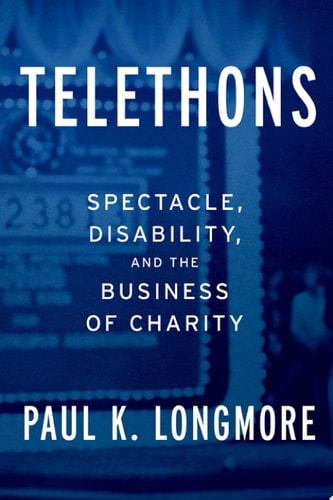
Telethons: Spectacle, Disability, and the Business of Charity
0
0
As an Amazon Associate and affiliate partner, Menrva Books earns from qualifying purchases. Learn more
Author Description
Movie stars, entertainers, game-show hosts, jugglers, plate-spinners, gospel choirs, corporate executives posing with over-sized checks, household name-brand products, smiling children in leg braces-all were fixtures of the phenomenon that defined American culture in the second half of the twentieth century: the telethon. Hundreds of millions watched these weekend-long variety shows that raised billions of dollars for disability-related charities. Drawing on over two decades of in-depth research, Telethons trenchantly explores the complexity underneath the campy spectacles. At its center are the disabled children, who, thanks to a particular kind of historical-cultural marginalization, turned out to be ideal tools for promoting corporate interests, privatized healthcare, and class status. Offering a public message about helping these unfortunate victims, telethons perpetuated a misleading image of people with disabilities as helpless, passive, apolitical members of American society. Paul K. Longmore's revelatory chronicle shows how these images in fact helped major corporations increase their bottom lines, while filling gaps in the strange public-private hybrid U.S. health insurance system. Only once disabled people pushed back in public protests did the broader implications for all Americans become clear.Mining insights from great thinkers such as Adam Smith, Edmund Burke, and Alexis de Tocqueville, along with contemporary cultural figures like Jerry Lewis, Ralph Nader, and several disability rights activists, Telethons offers a provocative meditation on big business, American government, popular culture, Cold War values, and "activism" both narrowly and broadly defined. As highly popular entertainment, telethons schooled Americans about how to feel about their bodies, fitness, health, and appropriate ways to interact with people whose bodies did not fit norms determined by advertisers. The programs also taught them about when to weep and how to cure guilt through
Menrva's Summary
THE THESIS
This book investigates how the American telethon functioned as a mechanism for corporate branding and the reinforcement of societal biases against disabled individuals. Paul K. Longmore, a historian and disability rights activist, utilizes two decades of archival research and cultural analysis to argue that these televised spectacles served to privatize healthcare responsibilities while promoting a passive, victim-centered image of disability. The work examines the intersection of Cold War values, corporate philanthropy, and the evolution of the U.S. healthcare system.
THE SCOPE MAP
What You Will Find
- Analysis of the cultural impact of televised charity variety shows in the late twentieth century.
- Examination of the relationship between corporate interests and the marketing of disability.
- Historical context regarding the U.S. public-private hybrid health insurance model.
- Theoretical frameworks drawn from political philosophers and contemporary activists.
Scope Limits
- The text focuses primarily on the American experience of telethons rather than international charity broadcasting models.
- It does not provide a comprehensive history of all disability advocacy groups, focusing instead on those directly involved in the telethon protest movement.
THE AUTHORITY PERSPECTIVE
Scholars in disability studies and media history recognize this work as a rigorous critique of the charity model of disability. Readers frequently note the academic density of the prose and the depth of the author's historical synthesis.
Page Count:
348
Publication Date:
2015-01-01
Publisher:
Oxford University Press
ISBN-10:
0190262095
ISBN-13:
9780190262099
History
Special Topics
Fund Raising
Media Studies
American History
Sociology
Community Tags
Similar Books