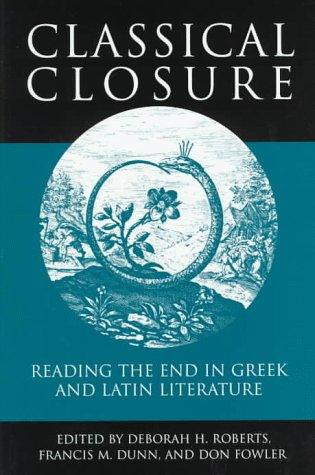
Classical Closure
0
0
As an Amazon Associate and affiliate partner, Menrva Books earns from qualifying purchases. Learn more
Author Description
The study of closure has played a significant part in contemporary literary criticism and is implicated in many of its concerns, from psychological aspects of the search for an end in narrative to the order imposed upon a text by politics or culture. This collection is the first large-scale attempt to assess the implications of closure for the study of classical literature. Twelve new essays by an international group of scholars focus on endings in Greek and Latin literature and demonstrate the different sorts of questions these endings pose: What narrative strategies did Hellenistic novelists employ? What is the political subtext of Ovid's half-finished Roman calendar? What cultural work is performed by the portrayal of a warrior's heroic end in the Iliad? Embracing a wide range of ancient authors and genres, the collection begins by closely examining critical approaches to closure, and ends with a comparative discussion of ancient and modern narrative. The extensive bibliography includes a survey of work in different fields that further illustrates the variety of approaches to closure.
Menrva's Summary
THE THESIS
This collection investigates the multifaceted implications of narrative closure for the study of classical literature, a topic previously underexplored in large-scale academic attempts. Authored by an international group of scholars, the book examines endings across Greek and Latin literature, utilizing a range of ancient authors and genres. It begins by dissecting critical approaches to closure before delving into specific case studies, such as the narrative strategies of Hellenistic novelists and the political subtext in Ovid's unfinished works. The collection concludes with a comparative analysis of ancient and modern narrative structures concerning endings.
THE SCOPE MAP
- Examination of critical approaches to literary closure.
- Analysis of narrative strategies in Hellenistic novels.
- Exploration of political subtext in Ovid's unfinished works.
- Discussion of heroic endings in Homer's Iliad.
- Comparative analysis of ancient and modern narrative endings.
- Extensive bibliography surveying work in different fields related to closure.
THE AUTHORITY PERSPECTIVE
This collection is a significant scholarly contribution, offering the first large-scale assessment of closure's impact on classical literature studies. The essays provide diverse perspectives on endings in Greek and Latin texts, engaging with contemporary critical theory while focusing on ancient specificities. The inclusion of a comparative discussion and an extensive bibliography further solidifies its value for researchers in classical studies and literary theory.
Page Count:
311
Publication Date:
1997-01-01
ISBN-10:
069104452X
Non-Fiction
History
Literary Criticism
Ancient History
Community Tags
Similar Books