A World Turned Upside Down
0
0
As an Amazon Associate and affiliate partner, Menrva Books earns from qualifying purchases. Learn more
Author Description
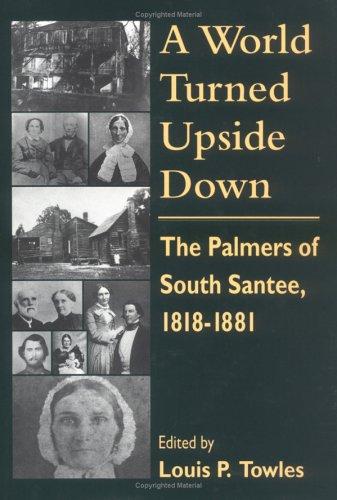
A remarkable chronicle that features one family's thirty-year plummet from prominence to poverty, A World Turned Upside Down follows the trials of the nineteenth-century planters that once dominated the southern banks of South Carolina's Santee River. Voluminous, literate, and rich in detail, the Palmer family letters and journal entries serve as a sustained narrative of the economic pressures and wartime tragedies that shattered the South's planter aristocracy. The Palmer papers offer insight into every aspect of daily plantation life: education, religion, household management, planting, slave-master relations, and social life. While the antebellum writings reveal the reinforcement of rigid attitudes about social, economic, political, and religious concerns, the wartime correspondence depicts the deterioration of those attitudes and of the Palmers' lifestyle. The letters tell of women sewing clothing for themselves and for soldiers, sending provisions to the troops, and "making do" with meager resources. The papers also describe problems facing the family patriarch - shortages, inflated Confederate currency, directives from the Confederate Congress on what to plant, and requisitioned labor - as he managed the plantations without the help of his sons and nephews. In addition to overwhelming material concerns, the Palmers chronicle the emotional impact of wartime casualties and of God's seeming indifference to the South and, more specifically, to the planters. At the close of the Civil War, the Palmers had no cash, horses, mules, seed, or human labor but plenty of debt, and their letters tell of unprofitable years of contract labor, experiences with sharecropping, and holdings that never matched prewar productivity. Of particular interest, they discuss the desertion and loss of slaves, the difficulties of adjusting to Reconstruction, the search for nonagricultural employment, and changes in the family's values, goals, and social circles as the Palmers dealt with
Menrva's Summary
THE THESIS
The economic and social structures of the American South are examined through the lens of one family's decline from wealth to ruin. This book chronicles the thirty-year descent of the Palmer family, once prominent planters on South Carolina's Santee River, from their antebellum prosperity to post-Civil War poverty. Drawing on extensive family letters and journal entries, the narrative details the economic pressures, wartime tragedies, and societal shifts that dismantled the Southern planter aristocracy. The Palmers' correspondence offers a granular view of plantation life, including education, religion, household management, agricultural practices, and the complex dynamics of slave-master relations, revealing how rigid antebellum attitudes eroded under the strain of conflict and loss.
THE SCOPE MAP
- Detailed accounts of daily plantation life, including education, religion, household management, and social activities.
- Analysis of economic pressures such as shortages, inflation, and Confederate directives on planting and labor.
- Correspondence detailing women's roles in supporting the war effort and managing with scarce resources.
- Exploration of the emotional toll of wartime casualties and perceived divine indifference.
- Post-war experiences with contract labor, sharecropping, and persistent unprofitability.
- Discussion of slave desertion and loss, challenges of Reconstruction, and the search for non-agricultural employment.
- Examination of evolving family values, goals, and social circles in the face of profound change.
THE AUTHORITY PERSPECTIVE
This meticulously researched chronicle offers a deep dive into the socio-economic realities of the American South during a period of immense upheaval. By centering on the Palmer family's extensive papers, the book provides a granular, personal perspective on the decline of the planter class. The detailed examination of plantation life, wartime struggles, and Reconstruction challenges makes it a valuable resource for understanding the complexities of the era.
Page Count:
1067
Publication Date:
1996-01-01
ISBN-10:
1570030472
ISBN-13:
9781570030475
History
Biography
Non-Fiction
Economic History
Social History
Southern History
Slavery
Reconstruction
Community Tags
Similar Books