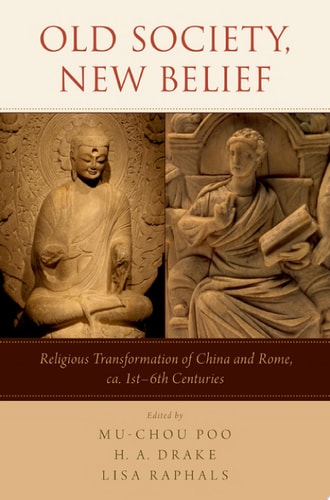
Old Society, New Belief
0
0
As an Amazon Associate and affiliate partner, Menrva Books earns from qualifying purchases. Learn more
Author Description
In The First Century Of The Common Era, Two New Belief Systems Entered Long-established Cultures With Radically Different Outlooks And Values: Missionaries Started To Spread The Teachings Of Jesus Of Nazareth In Rome And The Buddha In China. Rome And China Were Not Only Ancient Cultures, But Also Cultures Whose Elites Felt No Need To Receive The New Beliefs. Yet A Few Centuries Later The Two New Faiths Had Become So Well-established That Their Names Were Virtually Synonymous With The Polities They Had Entered As Strangers. Although There Have Been Numerous Studies Addressing This Phenomenon In Each Field, The Difficulty Of Mastering The Languages And Literature Of These Two Great Cultures Has Prevented Any Sustained Effort To Compare The Two Influential Religious Traditions At Their Initial Period Of Development. This Book Brings Together Specialists In The History And Religion Of Rome And China With A Twofold Aim. First, It Aims To Show In Some Detail The Similarities And Differences Each Religion Encountered In The Process Of Merging Into A New Cultural Environment. Second, By Juxtaposing The Familiar With The Foreign, It Also Aims To Capture Aspects Of This Process That Could Otherwise Be Overlooked. This Approach Is Based On The General Proposition That, When A New Religious Belief Begins To Make Contact With A Society That Has Already Had Long Honored Beliefs, Certain Areas Of Contention Will Inevitably Ensue And Changes On Both Sides Have To Take Place. There Will Be A Dynamic Interchange Between The Old And The New, Not Only On The Narrowly Defined Level Of Belief, But Also On The Entire Cultural Body That Nurtures These Beliefs. Thus, This Book Aims To Reassess The Nature Of Each Of These Religions, Not As Unique Cultural Phenomena But As Part Of The Whole Cultural Dynamics Of Human Societies.
Menrva's Summary
THE THESIS
This book investigates the comparative dynamics of how Christianity in Rome and Buddhism in China established themselves within long-standing, resistant cultural frameworks during the first century of the Common Era. Lisa Raphals and a team of specialists utilize historical and religious data to analyze the friction and eventual integration of these belief systems. The work argues that religious expansion is not a unique phenomenon but a predictable result of dynamic interchange between incoming faiths and established cultural bodies.
THE SCOPE MAP
What You Will Find
- Comparative analysis of early Christian expansion in Rome and Buddhist expansion in China
- Examination of elite resistance and cultural adaptation in ancient civilizations
- Theoretical framework for understanding religious contact and societal change
Scope Limits
- Does not provide a comprehensive history of either religion beyond their initial periods of development
- Does not attempt to cover the entirety of religious evolution in these regions beyond the specified timeframe
THE AUTHORITY PERSPECTIVE
Experts highlight this work as a rare, interdisciplinary effort that overcomes the linguistic barriers typically separating Roman and Chinese historical studies. Readers frequently note the academic density of the prose, which serves as a foundational text for scholars interested in cross-cultural religious development.
Page Count:
256
Publication Date:
2017-01-01
Publisher:
Oxford University Press
ISBN-10:
0190278366
ISBN-13:
9780190278366
History
Religion
Ancient History
Sociology of Religion
Community Tags
Similar Books