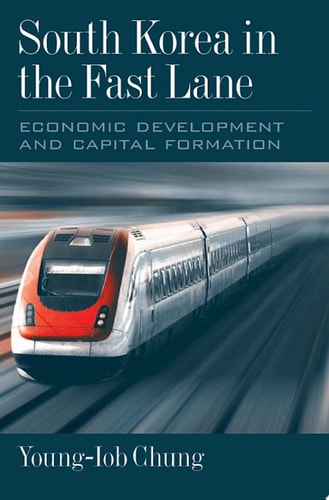
South Korea in the Fast Lane: Economic Development and Capital Formation
0
0
As an Amazon Associate and affiliate partner, Menrva Books earns from qualifying purchases. Learn more
Author Description
After having been a Japanese colony for more than 35 years until 1945, the miraculous economic development in the southern half of the Korean peninsula has multiplied the nation's output nearly 38 times and expanded per capita income by 16 times from $778 to $12,422 (in year 2000 prices) and transformed from basically an agrarian economy to that of a major industrial power, which is now considered one of a dozen or so of most industrialized countries in the world, during the 43-year period between 1953 and 1996. This book is a study of development of the South Korean economy from the time of the cessation of the Korean War to date, based on available data with minimal historical description, focusing on investment, the sources and means of capital formation, which is one of the most critical factors that contributed to economic development, and the government role of in them for economic growth and structural changes. The approach in this study is more analytical (without being mathematical, statistical, or technical, but with supporting quantitative data) than historical. There are a number of studies on some aspects of capital formation and economic development in short articles, but there is no comprehensive study/analysis/book of capital formation and economic development of South Korea since the Korean War, other than this authors comprehensive study of capital formation and economic transformation of Korea before 1945 (1876-1945). Not only this book fills the void of study of the subject after the Korean War but it also complement my first volume. This study reveals a number of significant, though perhaps not all unique, patterns and characteristics of capital formation and economic development of South Korea. The combination of circumstances, approaches, and experiences in the country was in many respects unique in comparison to many developing and developed countries, including many Asian countries, such as Japan and China.
Menrva's Summary
THE THESIS
What specific mechanisms of capital formation and government intervention enabled South Korea to transition from an agrarian society to a global industrial power between 1953 and 1996? Young-Iob Chung, an expert in Korean economic history, utilizes quantitative data to analyze the structural transformation of the South Korean economy. The author argues that the nation's rapid growth was driven by specific patterns of investment and state-led capital formation, providing a comprehensive analytical framework that bridges the gap between historical narrative and technical economic theory.
THE SCOPE MAP
What You Will Find
- Analysis of capital formation trends from 1953 to 1996.
- Examination of government roles in directing economic growth.
- Quantitative data sets comparing South Korean development to other Asian economies.
- Structural change assessments within the industrial and agrarian sectors.
Scope Limits
- The text avoids complex mathematical modeling or highly technical statistical jargon.
- It provides minimal historical narrative, focusing instead on economic analysis.
THE AUTHORITY PERSPECTIVE
Experts recognize this work as a critical companion to the author's previous research on pre-1945 Korean economic history. Readers frequently note that the prose is accessible to non-specialists while maintaining the rigor required for academic study of East Asian development.
Page Count:
481
Publication Date:
2007-01-01
Publisher:
Oxford University Press
ISBN-10:
019029602X
ISBN-13:
9780190296025
Economics
Asian Studies
Korean History
Community Tags
Other Editions(2)

Similar Books



Reader Comments
Share Your Thoughts
No comments yet. Be the first to share your thoughts!