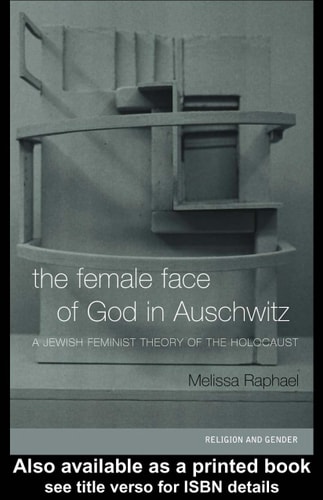
The Female Face of God in Auschwitz: A Jewish Feminist Theology of the Holocaust
0
0
As an Amazon Associate and affiliate partner, Menrva Books earns from qualifying purchases. Learn more
Author Description
The Female Face of God in Auschwitz, the first full-length feminist theology of the Holocaust, argues that the masculinist bias of post-Holocaust theology becomes fully apparent only when considered in the light of both women's perceptions of God and of their holocaustal experiencesand priorities. Building upon published testimonies of four women imprisoned at Auschwitz-BirkenauOlga Lengyel, Lucie Adelsberger, Bertha Ferderber-Salz, and Sara Nomberg-Przytykit considers women's distinct experiences of the holy in relation to God's perceived presence and absence in the camps. Engaging with Berkovits, Fackenheim, Levinas and other post-Holocaust Jewish thinkers, The Female Face of God in Auschwitz is a radical and subtle meditation upon God's role and meaning. Questioning the true nature of the Jewish God present in Auschwitz, and arguing for God's participation in its extremities of suffering and grace, it powerfully resists defamatory interpretations of the Holocaust as evidence of divine vengeance,indifference or neglect.
Menrva's Summary
THE THESIS
This work investigates the theological implications of the Holocaust through a feminist lens, questioning how the presence and nature of God are perceived within the extreme suffering of the Auschwitz-Birkenau camps. Melissa Raphael, a scholar of Jewish theology, challenges the traditional masculinist frameworks that have dominated post-Holocaust discourse. By centering the experiences and testimonies of women, she constructs a theology that addresses divine presence and absence in the face of systematic atrocity. The book argues against interpretations of the Holocaust as divine punishment, instead proposing a model of God that participates in human suffering and grace.
THE SCOPE MAP
What You Will Find
- Analysis of primary testimonies from four women imprisoned at Auschwitz-Birkenau: Olga Lengyel, Lucie Adelsberger, Bertha Ferderber-Salz, and Sara Nomberg-Przytyk.
- A critical engagement with established post-Holocaust thinkers including Berkovits, Fackenheim, and Levinas.
- A methodological framework that prioritizes gendered perceptions of the holy and the divine.
- A theological argument regarding the nature of God's participation in human extremities.
THE AUTHORITY PERSPECTIVE
Scholars and theologians recognize this text as a significant contribution to feminist religious studies for its rigorous re-evaluation of traditional Holocaust theology. Readers frequently note the dense, academic nature of the prose, which requires a foundational understanding of Jewish philosophical discourse to fully navigate.
Page Count:
228
Publication Date:
2003-01-01
Publisher:
Routledge
ISBN-10:
0203469070
ISBN-13:
9780203469071
Religion
History
Electronic books
Jewish Studies
Judaism
Presence of God
Jewish Holocaust
Feminist Theology
Auschwitz Concentration camp
Redemption
The Holocaust
Community Tags
Similar Books