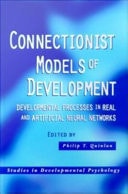
Connectionist Models of Development
0
0
As an Amazon Associate and affiliate partner, Menrva Books earns from qualifying purchases. Learn more
Author Description
Connectionist Models Of Development Is An Edited Collection Of Essays On The Current Work Concerning Connectionist Or Neural Network Models Of Human Development. The Brain Comprises Millions Of Nerve Cells That Share Myriad Connections, And This Book Looks At How Human Development In These Systems Is Typically Characterised As Adaptive Changes To The Strengths Of These Connections. The Traditional Accounts Of Connectionist Learning, Based On Adaptive Changes To Weighted Connections, Are Explored Alongside The Dynamic Accounts In Which Networks Generate Their Own Structures As Learning Proceeds. Unlike Most Connectionist Accounts Of Psychological Processes Which Deal With The Fully-mature System, This Text Brings To The Fore A Discussion Of Developmental Processes. To Investigate Human Cognitive And Perceptual Development, Connectionist Models Of Learning And Representation Are Adopted Alongside Various Aspects Of Language And Knowledge Acquisition. There Are Sections On Artificial Intelligence And How Computer Programs Have Been Designed To Mimic The Development Processes, As Well As Chapters Which Describe What Is Currently Known About How Real Brains Develop. This Book Is A Much-needed Addition To The Existing Literature On Connectionist Development As It Includes Up-to-date Examples Of Research On Current Controversies In The Field As Well As New Features Such As Genetic Connectionism And Biological Theories Of The Brain. It Will Be Invaluable To Academic Researchers, Post-graduates And Undergraduates In Developmental Psychology And Those Researching Connectionist/neural Networks As Well As Those In Related Fields Such As Psycholinguistics.
Menrva's Summary
THE THESIS
This collection investigates how connectionist and neural network models can effectively simulate and explain the mechanisms of human cognitive and perceptual development. Philip T. Quinlan compiles a series of essays that bridge the gap between computational modeling and biological reality. The text argues that human development is best understood as adaptive changes to connection strengths within neural systems, contrasting traditional weighted learning models with dynamic, self-structuring networks.
THE SCOPE MAP
What You Will Find
- Comparative analysis of traditional connectionist learning versus dynamic self-structuring network architectures.
- Integration of artificial intelligence programming with biological theories of brain development.
- Examination of language acquisition and knowledge development through computational frameworks.
- Exploration of emerging fields such as genetic connectionism and its implications for psychological research.
THE AUTHORITY PERSPECTIVE
Experts identify this volume as a critical resource for understanding the intersection of developmental psychology and computational neuroscience. Readers frequently note the academic density of the prose, which is tailored specifically for researchers and students in the field of cognitive science.
Page Count:
400
Publication Date:
2004-01-01
Publisher:
Taylor & Francis Group
ISBN-10:
0203494024
ISBN-13:
9780203494028
Psychology
Connectionism
Neuroscience
Developmental Psychology