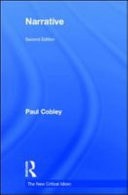
Narrative
0
0
As an Amazon Associate and affiliate partner, Menrva Books earns from qualifying purchases. Learn more
Author Description
Human Beings Have Constantly Told Stories, Presented Events And Placed The World Into Narrative Form. This Activity Suggests A Very Basic Way Of Looking At The World, Yet, This Book Argues, Even The Most Seemingly Simple Of Stories Is Embedded In A Complex Network Of Relations. Paul Cobley Traces These Relations, Considering The Ways In Which Humans Have Employed Narrative Over The Centuries To 're-present' Time, Space And Identity. This Second, Revised And Fully Updated Edition Of The Successful Guidebook To Narrative Covers A Range Of Narrative Forms And Their Historical Development From Early Oral And Literate Forms Through To Contemporary Digital Media, Encompassing Hellenic And Hebraic Foundations, The Rise Of The Novel, Realist Representations, Narratives Of Imperialism, Modernism, Cinema, Postmodernism And New Technologies. A Final Chapter Reviews The Way That Narrative Theory In The Last Decade Has Re-orientated Definitions Of Narrative. Written In A Clear, Engaging Style And Featuring An Extensive Glossary Of Terms, This Is The Essential Introduction To The History And Theory Of Narrative. In The Beginning: The End -- Early Narrative -- The Rise And Rise Of The Novel -- Realist Representation -- Beyond Realism -- Modernism And The Cinema -- Postmodernism -- In The End: The Beginning -- What Is Narrative? Paul Cobley. Includes Bibliographical References (p. 262-283) And Index.
Menrva's Summary
THE THESIS
This book investigates the fundamental human impulse to organize experience into narrative form and the complex relational networks that underpin even the simplest stories. Paul Cobley, a scholar in language and media, utilizes a historical and theoretical framework to analyze how narrative has been employed across centuries to construct concepts of time, space, and identity. The text argues that narrative is not merely a simple act of storytelling but a sophisticated mechanism for re-presenting reality through various cultural and technological mediums.
THE SCOPE MAP
What You Will Find
- Historical development of narrative from oral traditions to contemporary digital media.
- Analysis of major literary and cultural movements including Realism, Modernism, and Postmodernism.
- Examination of narrative structures in cinema and the rise of the novel.
- Theoretical exploration of how narrative theory has evolved over the last decade.
THE AUTHORITY PERSPECTIVE
Experts and students frequently identify this text as a foundational guidebook for understanding the history and theory of narrative. Readers often note the clarity of the prose and the utility of the extensive glossary in navigating complex narratological concepts.
Page Count:
304
Publication Date:
2013-01-01
Publisher:
Taylor & Francis Group
ISBN-10:
0415834430
ISBN-13:
9780203494929
Narratology
Literary Criticism
Communication Studies
Media Studies
Community Tags
Similar Books