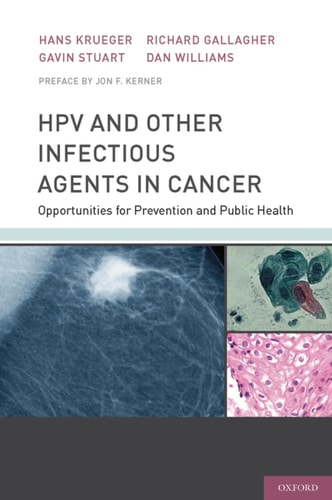
HPV and Other Infectious Agents in Cancer: Opportunities for Prevention and Public Health
0
0
As an Amazon Associate and affiliate partner, Menrva Books earns from qualifying purchases. Learn more
Author Description
After considering the aging population in developed countries, it has become clear to physicians and public policy administrators that prevention of cancer must play a more important role in national anti-cancer policy than it has in the past. The recent introduction of an HPV vaccine, coupled with discoveries concerning the relationship of H. pylori and cancer has brought the role of infectious agents in cancer into sharp focus in the medical community. While interest in the subject has grown, no single source existed to bring clinicians up-to-date on developments in disease mechanisms, population-based risk assessment and policy considerations in the field of cancer prevention. In this current and comprehensive text the authors review the basic science and clinical implications of individual infectious agents, while going beyond a mere update of the literature to offer insights on the current emerging prevention possibilities. This prevention perspective is what makes this particular text so valuable to researchers, epidemiologists, health care policy makers and oncologists. The discussion is organized to highlight the vital role of primary cancer prevention, and suggest directions for future research, practice and policy. Since HPV continues to be at the center of interest in the arena of infectious agents and cancer, the authors frame the majority of their discussion on this now-famous virus. The sheer volume of literature related to this virus and its many related cancers, and the burgeoning research on the development and implementation of a prophylactic vaccine necessitates a much fuller review of this infectious agent. Therefore, the book is roughly divided into two equal parts: one part devoted to HPV and another part devoted to five other prominent infectious agents in cancer.
Menrva's Summary
THE THESIS
This text investigates the critical role of infectious agents in cancer development and evaluates how primary prevention strategies can be integrated into national public health policy. The authors, including medical experts and policy researchers, synthesize basic science, clinical data, and epidemiological trends to argue that shifting focus toward the prevention of infection-related cancers is a necessary evolution for modern healthcare systems. By examining the mechanisms of specific pathogens, the text provides a framework for clinicians and policymakers to implement more effective prophylactic measures.
THE SCOPE MAP
What You Will Find
- Detailed analysis of HPV and its associated cancer risks
- Examination of five additional prominent infectious agents linked to oncology
- Review of population-based risk assessment methodologies
- Discussion on the implementation of prophylactic vaccines
Scope Limits
- Does not provide exhaustive clinical treatment protocols for patients already diagnosed with advanced-stage cancer
- Focuses primarily on prevention rather than therapeutic intervention for existing malignancies
THE AUTHORITY PERSPECTIVE
Experts identify this text as a comprehensive resource for oncologists and public health administrators seeking to understand the intersection of infectious disease and cancer prevention. Readers frequently note the clarity with which the authors bridge the gap between complex molecular mechanisms and high-level policy implementation.
Page Count:
559
Publication Date:
2010-01-01
Publisher:
Oxford University Press
ISBN-10:
0190453532
ISBN-13:
9780190453534
Public Health
Epidemiology
Medical
Oncology
Allied Health
Infectious Disease
Community Tags
Similar Books








Reader Comments
Share Your Thoughts
No comments yet. Be the first to share your thoughts!