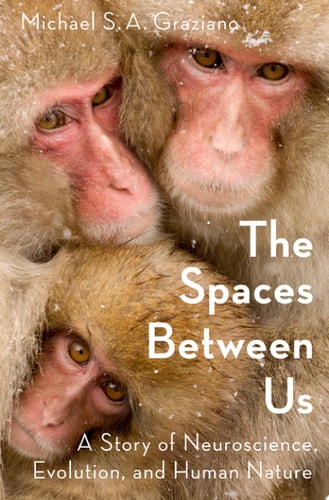
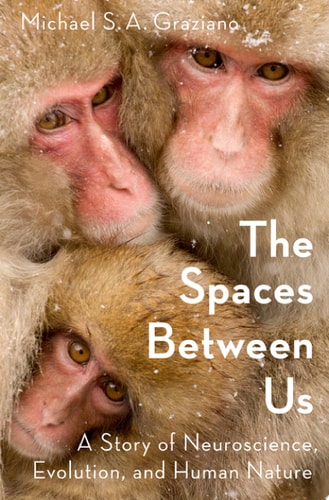
The Spaces Between Us
0
0
As an Amazon Associate and affiliate partner, Menrva Books earns from qualifying purchases. Learn more
Author Description
Each Of Us Has A Protected Zone Two Or Three Feet Wide, Swelling Around The Head And Narrowing Towards The Feet. This Zone Isn't Fixed In Size: If You're Nervous, It Grows; If You're Relaxed, It Shrinks. It Also Depends On Your Cultural Upbringing. Personal Space Is Small In Japan And Large In Australia. This Safety Zone, Called Personal Space, Provides An Invisible Spatial Scaffold That Frames Our Social Interactions. As Michael Graziano Argues In The Spaces Between Us, It Also Organizes Our Social And Emotional Spacing, Influences Our Facial Expressions, And Shapes Our Interactions With Everyday Objects Including Tools, Furniture, And Clothing. Even Ordinary Actions Like Walking Are Informed By A Continuous Under-the-surface Calculation Of Threats And Obstacles Around The Body: What Graziano Calls A Virtual Bubble-wrap Of Active Neurons That Fire And Move Us To Action, Even Before We May Be Conscious Of Our Course Corrections In Real Time. Humans Evolved A Complex Way Of Interacting With Others And Their Environment, And The Spaces Between Us Looks At How This Infrastructure May Have Led To The First Smile And To A Host Of Other Human Activities, From Tool Use, To Courtship, And To A Sense Of Self. The Book Concludes With A Case Study Of Graziano's Son, Who Had Heart-breaking Difficulties Developing A Functioning Personal Space. Written With Poignant Narrative Clarity, Graziano Makes The Case For The Interested Scientific Public That This System In The Brain Is More Than A Fascinating Scientific Topic: It's Deeply Personal And Shapes Our Human Nature.
Menrva's Summary
THE THESIS
This book investigates the biological and neurological mechanisms behind personal space, arguing that this invisible boundary is a fundamental scaffold for human social interaction, emotional regulation, and self-awareness. Michael Graziano, a professor of psychology and neuroscience at Princeton University, utilizes his extensive research on the brain's motor control systems to explain how the body maps its immediate surroundings. He posits that the brain maintains a constant, subconscious calculation of the space around us, which influences everything from our physical movements to our complex social behaviors.
THE SCOPE MAP
What You Will Find
- Neurological explanations of the peripersonal space system in the brain
- Analysis of how personal space varies across different cultural contexts
- Examination of the link between spatial awareness and the evolution of social cues like smiling
- A personal case study regarding the development of spatial awareness in children
Scope Limits
- The text does not provide a comprehensive clinical guide for treating severe spatial processing disorders
- It does not focus on architectural or urban planning applications of personal space
THE AUTHORITY PERSPECTIVE
Experts and readers alike note that Graziano successfully bridges the gap between complex neuroscientific data and accessible, human-centered prose. The text is frequently cited for its ability to make abstract brain functions feel relevant to daily social experiences.
Page Count:
224
Publication Date:
2017-01-01
Publisher:
Oxford University Press
ISBN-10:
0190461020
ISBN-13:
9780190461027
Psychology
Science
Neuroscience
Social Science
Evolutionary Biology
Human behavior
Community Tags
Other Editions(2)
Similar Books