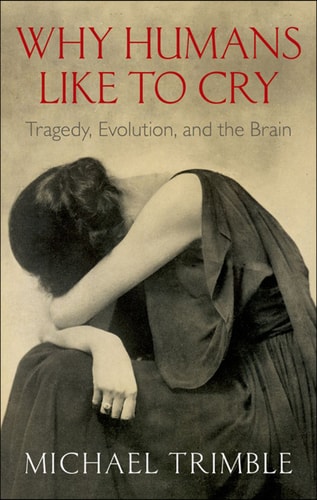
Why Humans Like to Cry: Tragedy, Evolution, and the Brain
0
0
As an Amazon Associate and affiliate partner, Menrva Books earns from qualifying purchases. Learn more
Author Description
Human beings are the only species to have evolved the trait of emotional crying. We weep at tragedies in our lives and in those of others - remarkably even when they are fictional characters in film, opera, music, novels, and theatre. Why have we developed art forms - most powerfully, music - which move us to sadness and tears? This question forms the backdrop to Michael Trimble's discussion of emotional crying, its physiology, and its evolutionary implications. His exploration examines the connections with other distinctively human features: the development of language, self-consciousness, religious practices, and empathy. Neuroanatomy and neurophysiology of the brain have uncovered unique human characteristics; mirror neurones, for example, explain why we unconsciously imitate actions and behaviour. Whereas Nietzsche argued that artistic tragedy was born with the ancient Greeks, Trimble places its origins far earlier. His neurophysiological and evolutionary insights shed fascinating light onto this enigmatic part of our humanity.
Menrva's Summary
THE THESIS
This book investigates the evolutionary origins and neurobiological mechanisms behind the uniquely human capacity for emotional crying. Michael R. Trimble, a professor of behavioral neurology, synthesizes data from neuroanatomy, evolutionary biology, and the humanities to argue that weeping is intrinsically linked to the development of human consciousness, empathy, and social bonding. He posits that the human propensity to experience sadness through art and tragedy is a byproduct of specific brain structures that evolved to facilitate complex social interaction.
THE SCOPE MAP
What You Will Find
- Analysis of the neuroanatomy and neurophysiology of emotional responses.
- Evolutionary theories regarding the development of language and self-consciousness.
- Examination of mirror neurons and their role in empathy and social imitation.
- Discussion of the intersection between artistic tragedy and human emotional evolution.
Scope Limits
- The text does not provide a comprehensive history of global artistic movements.
- It does not offer clinical therapeutic advice for managing emotional distress.
THE AUTHORITY PERSPECTIVE
Experts and readers often characterize this work as a dense, interdisciplinary study that bridges the gap between biological science and the humanities. Scholars frequently note that the text provides a foundational framework for understanding the biological basis of human aesthetic and emotional experiences.
Page Count:
241
Publication Date:
2012-01-01
Publisher:
OUP Oxford
ISBN-10:
0191644420
ISBN-13:
9780191644429
Psychology
Non-Fiction
Medical
Crying
Allied Health
Neuroscience
Evolutionary Biology
Tragedy
Human behavior
Community Tags
Similar Books