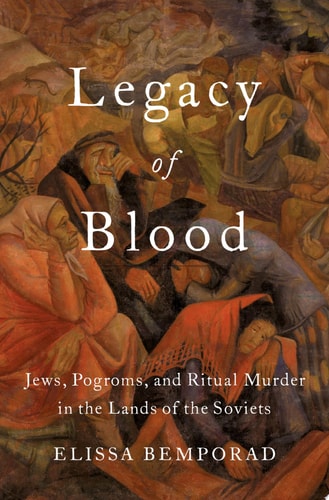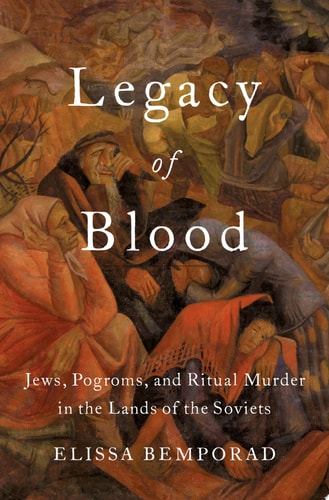
Legacy of Blood: Jews, Pogroms, and Ritual Murder in the Lands of the Soviets
0
0
As an Amazon Associate and affiliate partner, Menrva Books earns from qualifying purchases. Learn more
Author Description
This book traces the legacies of the two most extreme manifestations of tsarist antisemitism-pogroms and blood libels-in the Soviet Union, from 1917 to the early 1960s. Closely intertwined in history and memory, pogroms and blood libels were and are considered central to the Jewish experience in late Tsarist Russia, the only country on earth with large scale anti-Jewish violence in the early twentieth century. But their persistence and memory under the Bolsheviks-a chapter that is largely overlooked by the existing scholarship-significantly shaped the Soviet Jewish experience.By exploring the phenomenon and the memory of pogroms and blood libels in the Soviet territories of the interwar period as well as, after World War II, in the newly annexed territories, Bemporad studies the social realities of everyday antisemitism through the emergence of communities of violence and memories of violence. The fifty-year-span from the Bolshevik Revolution to the early years of Krushchev included a living generation of Jews, and non-Jews alike, who remembered the Beilis Affair, the pogroms of the civil war and in some cases even the violence of the prerevolutionary years. Bemporad also examines the ways in which Jews reacted to and remembered the unprecedented violence of the pogroms of the Russian Civil War, and how they responded to and which strategies they adopted to confront accusations of ritual murder. By tracing the "afterlife" of pogroms and blood libels in the USSR, Legacy of Blood sheds light on the broader question of the changing position of Jews in Soviet society. And by doing so it tells the story of the solid yet ever changing and at times ambivalent relationship between the Soviet state and the Jewish minority group.
Menrva's Summary
THE THESIS
This book investigates how the legacies of tsarist-era pogroms and blood libels persisted and evolved within the Soviet Union between 1917 and the early 1960s. Elissa Bemporad, a historian specializing in Soviet Jewish life, utilizes archival research and social history methodologies to analyze the intersection of state policy, communal memory, and everyday antisemitism. The work argues that these traumatic events were not merely historical relics but active forces that shaped the social realities and survival strategies of Soviet Jews throughout the mid-twentieth century.
THE SCOPE MAP
What You Will Find
- Analysis of the transition of anti-Jewish violence from the Tsarist period into the Bolshevik era.
- Examination of the Beilis Affair and its lingering impact on collective memory.
- Documentation of Jewish responses and defensive strategies against ritual murder accusations.
- Study of violence in both interwar Soviet territories and post-World War II annexed regions.
Scope Limits
- The study focuses primarily on the Soviet Union and does not provide a comprehensive global history of antisemitism.
- The analysis concludes in the early 1960s and does not cover the late Soviet period or the collapse of the USSR.
THE AUTHORITY PERSPECTIVE
Scholars recognize this work as a significant contribution to the study of Soviet Jewish identity and the long-term social impact of state-sanctioned violence. Readers frequently note the meticulous archival research and the clarity with which Bemporad navigates the complex relationship between the Soviet state and its Jewish minority.
Page Count:
252
Publication Date:
2019-12-18
Publisher:
Oxford University Press
ISBN-10:
0190466456
ISBN-13:
9780190466459
History
Jews europe
Political History
Social History
Ethnic relations
Antisemitism
Soviet History
Jewish Studies
Community Tags
Other Editions(2)
Similar Books