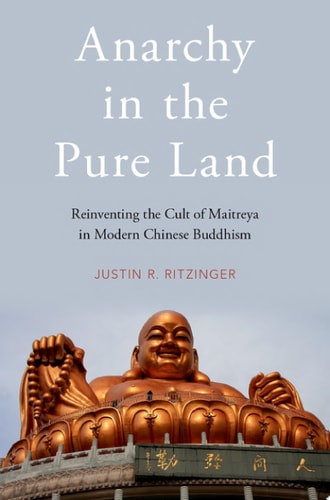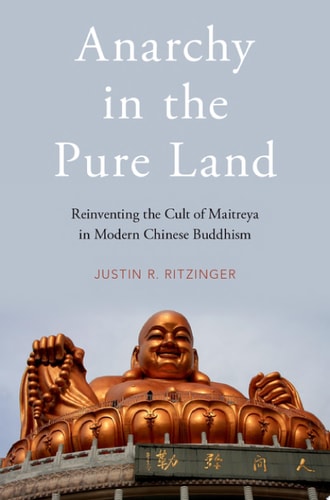
Anarchy in the Pure Land: Reinventing the Cult of Maitreya in Modern Chinese Buddhism
0
0
As an Amazon Associate and affiliate partner, Menrva Books earns from qualifying purchases. Learn more
Author Description
Anarchy In The Pure Land Investigates The Twentieth-century Reinvention Of The Cult Of Maitreya, The Future Buddha, Conceived By The Reformer Taixu And Promoted By The Chinese Buddhist Reform Movement. The Cult Presents An Apparent Anomaly: It Shows Precisely The Kind Of Concern For Ritual, Supernatural Beings, And The Afterlife That The Reformers Supposedly Rejected In The Name Of Modernity. This Book Shows That, Rather Than A Concession To Tradition, The Reimagining Of Ideas And Practices Associated With Maitreya Was An Important Site For Formulating A Buddhist Vision Of Modernity.
Menrva's Summary
THE THESIS
This book investigates how the twentieth-century Chinese Buddhist reform movement, led by the reformer Taixu, reinvented the cult of Maitreya to reconcile traditional supernatural beliefs with the demands of modernity. Justin Ritzinger, a scholar of Chinese Buddhism, utilizes historical archives and reformist literature to argue that the reimagining of Maitreya was not a regression to tradition, but a deliberate effort to formulate a distinctively Buddhist vision of a modern, utopian society.
THE SCOPE MAP
What You Will Find
- An analysis of Taixu's early radicalism and his synthesis of anarcho-socialist and Buddhist values.
- A detailed examination of the Maitreya cult's evolution during the May 4th era and the Nanjing Decade.
- Historical evidence tracing the cult's trajectory through the Republican period, the war years, and its subsequent legacies in the PRC and Taiwan.
Scope Limits
- The study focuses primarily on the intellectual and institutional reform movements rather than the lived, grassroots religious practices of the general populace.
- It does not provide an exhaustive history of Maitreya worship throughout all of Chinese history, focusing instead on the specific twentieth-century reinvention.
THE AUTHORITY PERSPECTIVE
Scholars of East Asian religion recognize this work as a significant contribution to the study of Republican-era Buddhist reform and the intersection of religion and political radicalism. Readers frequently note the academic density of the prose, which provides a rigorous framework for understanding how religious institutions navigate the pressures of modernization.
Page Count:
320
Publication Date:
2017-09-01
Publisher:
Oxford University Press, Incorporated
ISBN-10:
0190491175
ISBN-13:
9780190491178
Religion
Philosophy
Cults_china
Buddhism
Chinese History
Modernization
Community Tags
Other Editions(2)
Similar Books