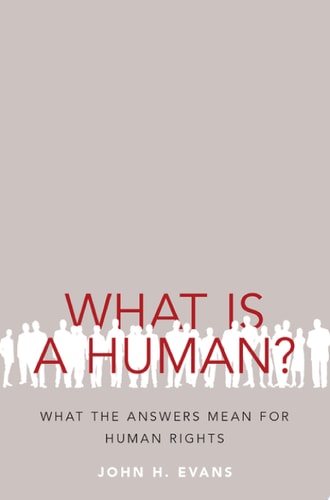
What Is a Human?
0
0
As an Amazon Associate and affiliate partner, Menrva Books earns from qualifying purchases. Learn more
Author Description
What Is A Human? Are Humans Those With Human Dna, Those In Possession Of Traits Like Rationality, Or Those Made In The Image Of God? The Debate Over What Makes Human Beings Unique Has Raged For Centuries. Many Think That If Society Accepts The Wrong Definition Of What It Is To Be Human, People Will Look At Their Neighbor As More Of An Animal, Object, Or Machine-making Maltreatment More Likely. In The Longest Running Claim, For Over 150 Years Critics Have Claimed That Taking A Darwinist Definition Results In People Treating Each Other More Like Animals. Despite Their Seriousness, These Claims Have Never Been Empirically Investigated. In This Groundbreaking Book John H. Evans Shows That The Definitions Promoted By Biologists And Philosophers Actually Are Associated With Less Support For Human Rights. Members Of The Public Who Agree With These Definitions Are Less Willing To Sacrifice To Stop Genocides And Are More Supportive Of Buying Organs From Poor People, Of Experimenting On Prisoners Against Their Will, And Of Torturing People To Potentially Save Lives. It Appears That The Critics Are Right. However, Evans Finds That Few Americans Agree With These Academic Definitions. Looking At How Most Of The Public Defines Humanity, We See A Much More Nuanced Picture. In A Fascinating Account, He Shows That The Dominant Definitions Are Unlikely To Lead To Human Rights Abuses. He Concludes That The Critics Are Right About The Definitions Of A Human Promoted By Academic Biologists And Philosophers, And Are Therefore Justified In Their Vigilance. However, Because At Present Few Americans Agree With These Definitions, The Academic Definitions Would Have To Spread Much More Extensively Before Impacting How The General Public Acts. Evans' Book Is A Major Corrective To The More Than Century-long Debate About The Impact Of Definitions Of A Human.
Menrva's Summary
THE THESIS
Does the adoption of specific academic definitions of humanity—such as those rooted in Darwinian biology—correlate with a decrease in support for human rights and an increase in the potential for maltreatment? John H. Evans, a professor of sociology, investigates this long-standing concern by empirically testing whether academic definitions of humanity influence public attitudes toward human rights. He utilizes large-scale survey data to compare academic perspectives with the actual beliefs held by the American public, ultimately evaluating the validity of historical critiques regarding the moral consequences of scientific definitions.
THE SCOPE MAP
What You Will Find
- Empirical analysis of public opinion regarding human rights and moral status.
- A comparative study between academic definitions of humanity and general public consensus.
- Data on public willingness to support controversial practices like organ trade and prisoner experimentation.
Scope Limits
- The study focuses primarily on American public opinion and may not reflect global cultural perspectives.
- The book does not provide a definitive philosophical resolution to the question of what constitutes a human, focusing instead on the social consequences of these definitions.
THE AUTHORITY PERSPECTIVE
Experts recognize this work as a significant empirical contribution to the long-standing debate regarding the intersection of biology, philosophy, and social ethics. Readers frequently note that the text provides a clear, data-driven methodology that brings much-needed clarity to a historically speculative conversation.
Page Count:
288
Publication Date:
2016-01-01
Publisher:
Oxford University Press
ISBN-10:
0190608080
ISBN-13:
9780190608088
Philosophy
Sociology
Social Science
Ethics
Human rights
Anthropology
Community Tags
Similar Books