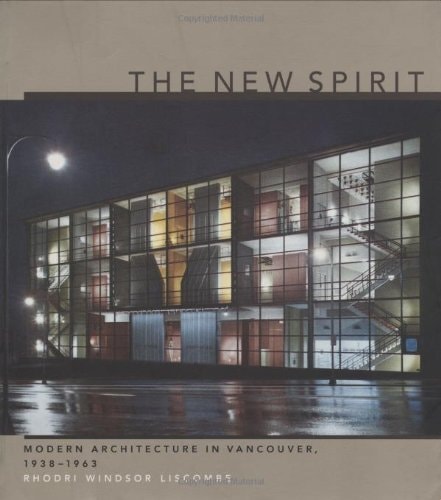
The New Spirit: Vancouver Modernism, 1938-1963
0
0
As an Amazon Associate and affiliate partner, Menrva Books earns from qualifying purchases. Learn more
Author Description
The Modernist architecture of the two post-war decades established Vancouver's reputation as a center for progressive design and culture, a city where architects pursued their desire "to make of architecture a great humanistic experience." With an introduction by Adele Freedman discussing Modernism in Canadian architecture as a whole, Rhodri Windsor Liscombe's The New Spirit is the first comprehensive study of the acclaimed Modernist architecture of Vancouver.Modernism in Vancouver had many facets: it was a synthesis of expressions driven by a sense of social responsibility; it emphasized concerns such as economy of form, human uses, relation to site, affordability, and the effective employment of new technology. The author explores 25 years of sophisticated and distinctive architectureal innovation, examining both the conditions that brought this movement about and the forces that led to its decline. Given the eventual debasement of Modernism and the demolition of many of these Vancouver buildings, this account of the ambition of Modernist Canadian architects "to enhance the physical environment for human well-being" -- in homes, community centers, libraries and universities, churches, office towers, and apartment buildings -- serves as a reminder of how high ideals and a lively architectural culture can shape a better city.
Menrva's Summary
THE THESIS
The New Spirit investigates the rise and fall of Vancouver's distinctive Modernist architectural movement between 1938 and 1963. This period saw architects striving to create a humanistic experience through design, emphasizing social responsibility, economy of form, and the effective use of new technologies. The book examines the conditions that fostered this architectural innovation, the specific characteristics of the movement, and the factors that led to its eventual decline, serving as a vital record of a period when ambitious ideals shaped a better city.
THE SCOPE MAP
- An exploration of Vancouver's Modernist architecture from 1938 to 1963.
- An introduction by Adele Freedman contextualizing Modernism within Canadian architecture.
- Analysis of the synthesis of expressions driven by social responsibility.
- Examination of concerns such as economy of form, human uses, and relation to site.
- Discussion of affordability and the effective employment of new technology in design.
- An account of the forces that led to the movement's decline.
- Case studies of Modernist buildings in homes, community centers, libraries, universities, churches, office towers, and apartment buildings.
THE AUTHORITY PERSPECTIVE
The book is recognized as the first comprehensive study of Vancouver's acclaimed Modernist architecture. It is valued for its detailed examination of a significant period in the city's design history, highlighting the architects' ambition to enhance the physical environment for human well-being. The work serves as a crucial reminder of the impact of high ideals and a lively architectural culture on urban development, particularly given the subsequent demolition of many of these buildings.
Page Count:
208
Publication Date:
1997-01-01
Publisher:
Centre canadien d'architecture/Canadian Centre for Architecture
ISBN-10:
1550545558
ISBN-13:
9781550545555
History
Non-Fiction
Architecture
urban planning
Community Tags
Similar Books