Social Work and Social Development: Perspectives from India and the United States
0
0
As an Amazon Associate and affiliate partner, Menrva Books earns from qualifying purchases. Learn more
Author Description
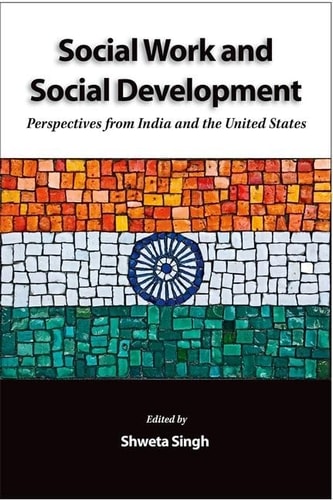
The classic paradigm "think globally and act locally" is discovering a new relevance in the context of social development, as it provides a useful perspective on addressing the needs of nations as complex and diverse as India. In order to understand a country's motivation for change and social action, it is first necessary to understand the history of the people and their way of life. Social Work and Social Development: Perspectives from India and the United States compares India and the United States' approaches to social work and social development. The book highlights the similarities between the two countries, especially the cultural pluralism, democratic political structures, and social welfare policy commitments that make possible an inclusionary exchange of knowledge in the fields of social work and social development.The contributors to this book include both US and Indian experts in sociology, theology, women's studies, and social work. They examine both micro and macro issues ranging from religious pluralism, population migration, and criminal justice to child welfare, health care, and mental health policies. This unique approach integrates these multiple perspectives and provides a faceted picture of social structures and change in both countries.The goals of this book are to move finally beyond the ethnocentric mantra of applying "developed" solutions to "developing" problems and redefine the parameters for understanding people and problems in international social work. It is a unique and valuable resource for course work in social work, social development, international studies, and Asian studies. The framework presented in this book can be used as a model for further comparisons, so that we truly can begin thinking globally while acting locally not just in India, but in the United States and the rest of the world.
Menrva's Summary
THE THESIS
This book investigates how comparative analysis between India and the United States can redefine international social work by moving beyond ethnocentric models of development. Shweta Singh, an expert in the field, curates a collection of essays from scholars in sociology, theology, and social work to examine the structural similarities and differences between these two democratic nations. The text argues that by understanding the historical and cultural contexts of both countries, practitioners can develop more effective, inclusive strategies for social change that transcend traditional 'developed' versus 'developing' dichotomies.
THE SCOPE MAP
What You Will Find
- Comparative analysis of social welfare policies in India and the United States
- Examination of micro and macro social issues including religious pluralism, migration, and criminal justice
- Discussion of child welfare, health care, and mental health policy frameworks
- A model for cross-cultural knowledge exchange in social work education
Scope Limits
- The text focuses primarily on the intersection of Indian and American systems rather than providing a comprehensive global survey of all nations
- It does not offer a singular, universal solution for social development but rather a framework for comparative study
THE AUTHORITY PERSPECTIVE
Experts identify this work as a significant contribution to international social work literature, particularly for its effort to decenter Western-centric development models. Readers frequently note that the text serves as a valuable resource for academic coursework in sociology and international studies due to its multidisciplinary approach.
Page Count:
429
Publication Date:
2013-01-01
Publisher:
Oxford University Press
ISBN-10:
0190616296
ISBN-13:
9780190616298
Politics
Social Work
Comparative Politics
Sociology
Public Policy
International Studies
Community Tags
Similar Books