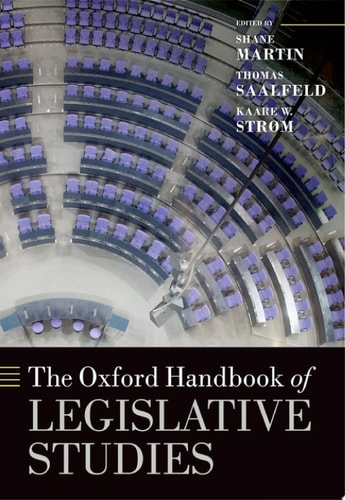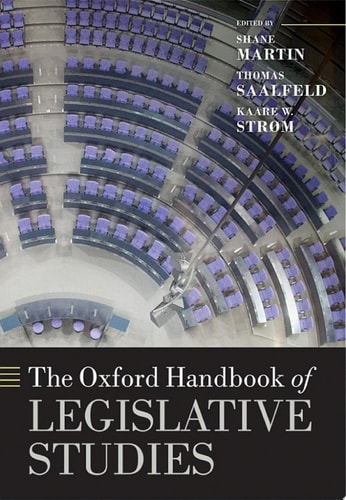
The Oxford Handbook of Legislative Studies
0
0
As an Amazon Associate and affiliate partner, Menrva Books earns from qualifying purchases. Learn more
Author Description
Legislatures are political bodies essential to democracy and the rule of law. They present social scientists with numerous intriguing puzzles, with far-reaching implications for our understanding of political institutions. Why, and how, have these ancient assemblies, established in pre-democratic times, survived the transition to mass democracies? How have they adapted? How do they structure such processes as budgeting, legislation, and executive oversight? How do their members get selected, and what consequences flow from differences in these rules? What roles do committees and political parties play in contemporary legislatures? What functions do legislatures perform in autocratic, semi-democratic or recently democratized societies? What explains the similarities and differences in legislative rules, powers and recruitment? What are the policy and other consequences of variation in how legislatures are organized and function? The 33 chapters in The Oxford Handbook of Legislative Studies, written by 47 of the most distinguished legislative scholars, provide a comprehensive and up-to-date description and assessment of the state of the art in legislative studies. Key themes explored include theoretical paradigms and methodological approaches to the study of legislatures, representation and legislative careers, internal organization, the role of parties within legislatures and the role of legislatures in policy making and accountability. The Handbook also explores the emergence of parliaments in historical and contemporary contexts, including new democracies and trans-national institutions.
Menrva's Summary
THE THESIS
This volume investigates the fundamental mechanisms, historical evolution, and contemporary functions of legislative bodies within diverse political systems. The editors, Kaare W. Strøm, Shane Martin, and Thomas Saalfeld, curate contributions from 47 prominent scholars to synthesize current academic knowledge regarding how parliaments and assemblies structure governance, representation, and executive oversight. The text establishes a rigorous framework for analyzing legislative behavior, institutional design, and the impact of recruitment rules on policy outcomes.
THE SCOPE MAP
What You Will Find
- Theoretical paradigms and methodological approaches to legislative analysis
- Comparative studies of legislative organization, budgeting, and oversight
- Examination of legislative roles in autocratic, semi-democratic, and new democracies
- Analysis of political parties and committee structures
- Historical context of parliamentary development
Scope Limits
- Does not provide a singular unified theory of legislative behavior
- Focuses primarily on institutional and structural analysis rather than individual political biography
THE AUTHORITY PERSPECTIVE
Scholars and students of political science frequently identify this volume as a foundational reference for understanding the complexities of legislative institutions. Experts highlight the comprehensive nature of the chapters, noting that the text serves as a primary resource for both established researchers and graduate-level study.
Page Count:
784
Publication Date:
2014-01-01
Publisher:
OUP Oxford
ISBN-10:
0191019070
ISBN-13:
9780191019074
American Government
Legislative Studies
Comparative Politics
Public Policy
Government