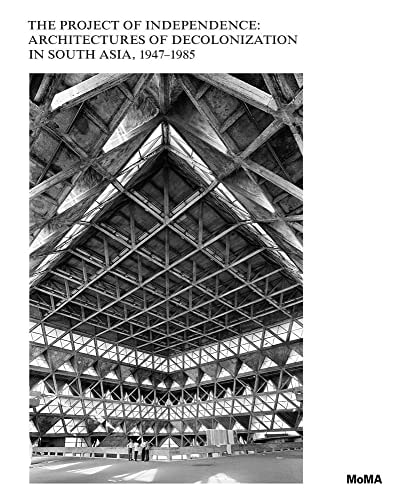
The Project of Independence: Architectures of Decolonization in South Asia, 1947-1985
0
0
As an Amazon Associate and affiliate partner, Menrva Books earns from qualifying purchases. Learn more
Author Description
How South Asian architects broke with the colonial past and found ingenious ways to negotiate modernism's universalist claims with the material and labor conditions on the ground South Asia holds a unique place among the many regions of the world where modern architecture was understood as both a tool for social progress and a global lingua franca in the second half of the 20th century. Following the end of British rule in 1947-48, architects in the newly formed nations of India, Pakistan, Bangladesh (East Pakistan until 1971) and Ceylon (now Sri Lanka) proposed a novel understanding of modernity, disrupting the colonial hierarchy of center and periphery by challenging modernism's universalist claims. Architecture offered multiple ways to break with the colonial past. Through the establishment of institutions that embodied the societal aspirations of the period, and the creation of new cities and spaces for political representation, South Asian architects produced a distinct body of work in dialogue with global developments while advancing the theory and practice of low-cost, climatically and socially responsive design. Anchored by a newly commissioned portfolio of images from architectural photographer Randhir Singh, this richly illustrated and meticulously researched catalog features essays by the curators and leading scholars in the field on subjects such as the politics of concrete, institution-building, higher education, housing, infrastructure and industry, landscape and design, as well as presentations of 17 transformative projects from around the subcontinent. While several of the architects appearing in these pages have in recent years received monographic exhibitions, The Project of Independence marks the first attempt to consider their work within the ideological frameworks of its creation and the political context of the region as a whole.
Menrva's Summary
THE THESIS
This book investigates how architects in post-colonial South Asia challenged the universalist claims of modernism to forge distinct architectural identities. The authors explore how architects in India, Pakistan, Bangladesh, and Sri Lanka, after gaining independence, reinterpreted modernity. They disrupted colonial hierarchies by developing low-cost, climatically responsive, and socially aware designs, creating new cities and institutions that reflected national aspirations. The work is presented within the ideological and political contexts of the region, moving beyond individual architect retrospectives.
THE SCOPE MAP
- Analysis of the politics of concrete and material use in post-colonial architecture.
- Exploration of institution-building and its architectural manifestations.
- Examination of higher education campuses and their design.
- Studies on housing, infrastructure, and industrial projects.
- Discussion of landscape and design in the context of decolonization.
- Presentation of 17 transformative architectural projects from across South Asia.
- Newly commissioned photography by Randhir Singh.
THE AUTHORITY PERSPECTIVE
This meticulously researched catalog is positioned as a significant contribution to understanding post-colonial architecture in South Asia, offering the first attempt to contextualize the work of key architects within their specific ideological and political frameworks. The inclusion of essays by curators and leading scholars, alongside a portfolio of new photography, suggests a scholarly and visually rich exploration of the subject. The focus on challenging modernist universalism and adapting design to local conditions indicates a critical engagement with architectural history and theory.
Page Count:
245
Publication Date:
2022-01-01
Publisher:
Museum of Modern Art
ISBN-10:
1633451240
ISBN-13:
9781633451247
Non-Fiction
History
Architecture
urban planning
Community Tags
Similar Books








Reader Comments
Share Your Thoughts
No comments yet. Be the first to share your thoughts!