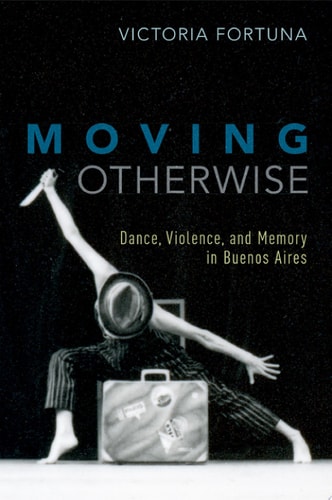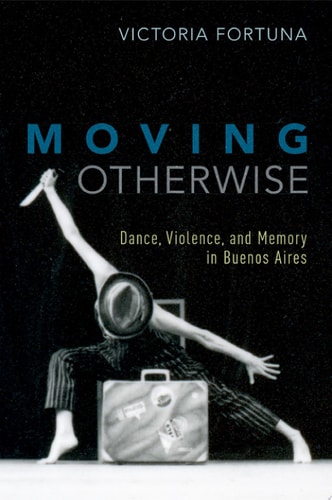
Moving Otherwise
0
0
As an Amazon Associate and affiliate partner, Menrva Books earns from qualifying purchases. Learn more
Author Description
Moving Otherwise examines how contemporary dance practices in Buenos Aires, Argentina enacted politics within climates of political and economic violence from the mid-1960s to the mid-2010s. From the repression of military dictatorships to the precarity of economic crises, contemporary dancers and audiences consistently responded to and reimagined the everyday choreographies that have accompanied Argentina's volatile political history. The titular concept, moving otherwise names how both concert dance and its off-stage practice and consumption offer alternatives to and modes to critique the patterns of movement and bodily comportment that shape everyday life in contexts marked by violence. Drawing on archival research based in institutional and private collections, over fifty interviews with dancers and choreographers, and the author's embodied experiences as a collaborator and performer with active groups, the book analyzes how a wide range of practices moved otherwise, including concert works, community dance initiatives, and the everyday labor that animates dance. It demonstrates how these diverse practices represent, resist, and remember violence and engender new forms of social mobilization on and off the theatrical stage. As the first book length critical study of Argentine contemporary dance, it introduces a breadth of choreographers to an English speaking audience, including Ana Kamien, Susana Zimmermann, Estela Maris, Alejandro Cervera, Renate Schottelius, Susana Tambutti, Silvia Hodgers, and Silvia Vladimivsky. It also considers previously undocumented aspects of Argentine dance history, including crossings between contemporary dancers and 1970s leftist political militancy, Argentine dance labor movements, political protest, and the prominence of tango themes in contemporary dance works that address the memory of political violence. Contemporary dance, the book demonstrates, has a rich and diverse history of political engagement in Argentina.
Menrva's Summary
THE THESIS
This book investigates how contemporary dance practices in Buenos Aires functioned as a form of political engagement and resistance amidst the economic and state-sponsored violence occurring between the mid-1960s and mid-2010s. Victoria Fortuna, a scholar and practitioner, utilizes a framework of embodied research to analyze how choreographic choices and dance labor served as critiques of the volatile political climate in Argentina. By examining the intersection of artistic expression and social mobilization, the author argues that dance provides a unique lens through which to understand the memory and resistance of political trauma.
THE SCOPE MAP
What You Will Find
- Historical analysis of Argentine contemporary dance from the 1960s to the 2010s.
- Examination of the relationship between dance labor movements and leftist political militancy.
- Case studies of specific choreographers including Ana Kamien, Renate Schottelius, and Alejandro Cervera.
- Analysis of how tango themes are repurposed to address political memory.
Scope Limits
- The study is geographically restricted to the dance scene in Buenos Aires.
- The text focuses primarily on contemporary concert dance and its associated off-stage practices rather than traditional folk dance forms.
THE AUTHORITY PERSPECTIVE
Experts recognize this work as a foundational text for its role in documenting previously unrecorded aspects of Argentine dance history. Readers frequently note the academic rigor and the author's unique perspective as both a researcher and an active participant in the dance community.
Page Count:
304
Publication Date:
2018-01-01
Publisher:
Oxford University Press
ISBN-10:
0190627034
ISBN-13:
9780190627034
History
Dance
Argentina
Community Tags
Similar Books