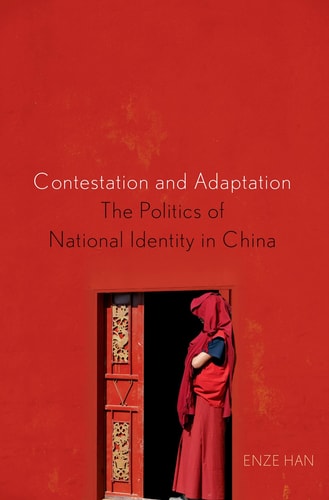
Contestation and Adaptation
0
0
As an Amazon Associate and affiliate partner, Menrva Books earns from qualifying purchases. Learn more
Author Description
Contestation and Adaptation unravels the complexities of national-identity contestation among various ethnic minority groups in China. It focuses on the interactions between domestic and international forces that inform ethnic groups' national-identity contestation, positing a theoretical framework where international factors play a significant role in determining why and when ethnic groups will contest the national identities imposed on them by central governments as part of the nation-building process.Simmering grievances and occasional outbursts of social unrest among ethnic minority populations in China challenge not only the ruling party's legitimacy and governance, but also contemporary Chinese national identity and the territorial integrity of the Chinese state. But, as Enze Han points out, of the fifty-five ethnic minority groups in China, only the Tibetans and Uyghurs have forcefully contested the idea of a Chinese national identity. He argues that whether ethnic groups contest those national identities depends on whether they perceive a better, achievable alternative. In particular, Han argues that ethnic groups with extensive external kinship networks are most likely to perceive a capacity to achieve better circumstances and are, therefore, more likely to politically mobilize to contest national identity. In the absence of such alternatives ethnic groups are more likely to cope with their situation through emigration, political ambivalence, or assimilation. Using this theoretical framework, the book compares the way that five major ethnic minority groups in China negotiate their national identities with the Chinese nation-state: Uyghurs, Chinese Koreans, Dai, Mongols, and Tibetans.Overall, Contestation and Adaptation sheds light on the nation-building processes in China over the past six decades and the ways that different groups have resisted or acquiesced in their dealings with the Chinese state and majority Han Chinese society.
Menrva's Summary
THE THESIS
This book investigates why certain ethnic minority groups in China actively contest the state-imposed national identity while others choose assimilation or political ambivalence. Enze Han, a scholar specializing in ethnic politics and international relations, utilizes a comparative framework to analyze the intersection of domestic governance and international influence. He argues that the presence of external kinship networks serves as a critical variable, providing ethnic groups with the perceived capacity to seek alternatives to the status quo.
THE SCOPE MAP
What You Will Find
- A theoretical framework linking external kinship networks to domestic political mobilization.
- Comparative analysis of five specific ethnic groups: Uyghurs, Chinese Koreans, Dai, Mongols, and Tibetans.
- Examination of nation-building processes in China over a sixty-year period.
Scope Limits
- The study does not provide an exhaustive history of every one of China's fifty-five recognized ethnic minority groups.
- The analysis focuses primarily on political and identity-based contestation rather than purely economic or cultural history.
THE AUTHORITY PERSPECTIVE
Scholars in the field of Asian studies frequently cite this work for its clear theoretical contribution to the study of ethnic politics and state-building. Readers often note the academic rigor of the comparative methodology, which provides a structured approach to understanding complex social dynamics in contemporary China.
Page Count:
240
Publication Date:
2016-01-01
Publisher:
Oxford University Press
ISBN-10:
0190624019
ISBN-13:
9780190624019
Ethnic Studies
China Studies
Nationalism
Politics & Government
National Characteristics Chinese
Sociology
China
International relations
Ethnicity
Ethnic Groups
Community Tags
Other Editions(2)

Similar Books








Reader Comments
Share Your Thoughts
No comments yet. Be the first to share your thoughts!