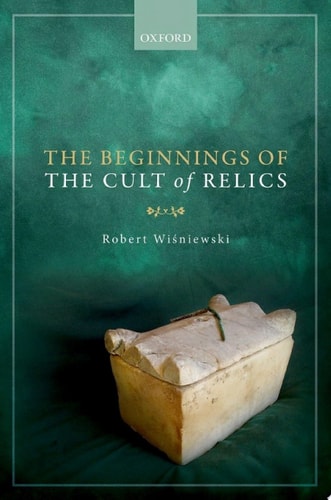
The Beginnings of the Cult of Relics
0
0
As an Amazon Associate and affiliate partner, Menrva Books earns from qualifying purchases. Learn more
Author Description
Christians have often admired and venerated the martyrs who died for their faith, but for a long time thought that the bodies of martyrs should remain undisturbed in their graves. Initially, the Christian attitude towards the bones of the dead, saint or not, was that of respectful distance. The Beginnings of the Cult of Relics examines how this attitude changed in the mid-fourth century. Robert Wiśniewski investigates how Christians began to believe in the power of relics, first over demons, then over physical diseases and enemies. He considers how the faithful sought to reveal hidden knowledge at the tombs of saints and why they buried the dead close to them. An essential element of this new belief was a strong conviction that the power of relics was transferred in a physical way and so the following chapters study relics as material objects. Wiśniewski analyses how contact with relics operated and how close it was. Did people touch, kiss, or look at the very bones, or just at tombs and reliquaries which contained them? When did the custom of dividing relics begin? Finally, the book deals with discussions and polemics concerning relics, and attempts to find out the strength of the opposition which this new phenomenon had to face, both within and outside Christianity, on its way to become an essential element of medieval religiosity.
Menrva's Summary
THE THESIS
This book investigates the historical transition in the mid-fourth century that led to the emergence and widespread adoption of the cult of relics within Christianity. Robert Wiśniewski, a scholar specializing in late antiquity, utilizes a combination of hagiographical texts, archaeological evidence, and theological polemics to map this shift. He argues that the transformation of the Christian attitude toward the dead—moving from respectful distance to active veneration—was rooted in a belief in the physical transfer of power from the saint to the relic.
THE SCOPE MAP
What You Will Find
- Analysis of the shift in Christian attitudes toward martyr remains during the mid-fourth century.
- Examination of relics as material objects and the mechanics of physical contact.
- Investigation into the origins of relic division and the use of reliquaries.
- Discussion of contemporary polemics and opposition to the cult from both internal and external critics.
Scope Limits
- The study focuses primarily on the formative period of the cult and does not cover the full extent of its development in the later Middle Ages.
- The analysis is limited to the specific transition from the early Christian period to the mid-fourth century.
THE AUTHORITY PERSPECTIVE
Scholars and historians recognize this work as a rigorous examination of the material culture surrounding early Christian piety. Readers frequently note the academic density of the prose and the author's meticulous attention to primary source evidence.
Page Count:
263
Publication Date:
2018-01-01
Publisher:
OUP Oxford
ISBN-10:
0191075043
ISBN-13:
9780191075049
Religion
History
Cultural History
Ancient History
Saints
Christianity
Community Tags
Similar Books