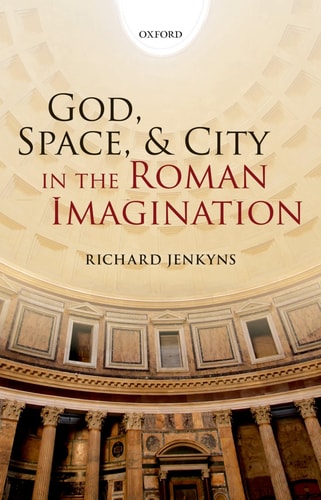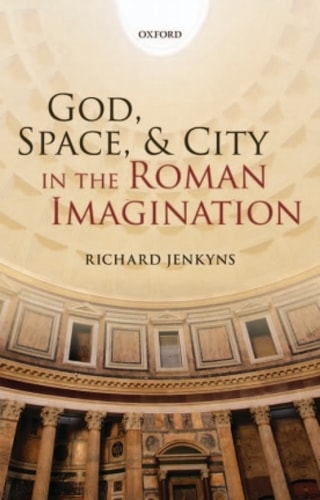
God, Space, and City in the Roman Imagination
0
0
As an Amazon Associate and affiliate partner, Menrva Books earns from qualifying purchases. Learn more
Author Description
God, Space, and City in the Roman Imagination is a unique exploration of the relationship between the ancient Romans' visual and literary cultures and their imagination. Drawing on a vast range of ancient sources, poetry and prose, texts, and material culture from all levels of Roman society, it analyses how the Romans used, conceptualized, viewed, and moved around their city. Jenkyns pays particular attention to the other inhabitants of Rome, the gods, and investigates how the Romans experienced and encountered them, with a particular emphasis on the personal and subjective aspects of religious life. Through studying interior spaces, both secular (basilicas, colonnades, and forums) and sacred spaces (the temples where the Romans looked upon their gods) and their representation in poetry, the volume also follows the development of an architecture of the interior in the great Roman public works of the first and second centuries AD. While providing new insights into the working of the Romans' imagination, it also offers powerful challenges to some long established orthodoxies about Roman religion and cultural behaviour.
Menrva's Summary
THE THESIS
This work investigates how the Roman imagination conceptualized the interplay between urban space, religious experience, and the presence of the divine within the city. Richard Jenkyns, a scholar of classical literature and culture, synthesizes a broad array of literary texts and material evidence to argue that Roman religious life was deeply rooted in the subjective experience of physical environments. By examining the intersection of architecture and literature, he challenges traditional academic interpretations of Roman cultural behavior and religious practice.
THE SCOPE MAP
What You Will Find
- Analysis of interior architectural spaces including basilicas, colonnades, and forums
- Examination of sacred spaces and temple design
- Integration of Roman poetry and prose as primary sources for cultural perception
- Investigation into the personal and subjective aspects of Roman religious life
Scope Limits
- The study focuses primarily on the first and second centuries AD
- It does not provide an exhaustive survey of all Roman religious rituals or state-level theology
THE AUTHORITY PERSPECTIVE
Scholars and students of classical antiquity frequently note the depth of Jenkyns's interdisciplinary approach in bridging the gap between material culture and literary representation. Experts highlight this as a significant contribution to the study of Roman urbanism that successfully complicates established orthodoxies regarding the Roman religious experience.
Page Count:
432
Publication Date:
2013-01-01
Publisher:
OUP Oxford
ISBN-10:
019166300X
ISBN-13:
9780191663000
Architecture
Religion
History
Cultural History
Sacred Space
Ancient History
Latin poetry
Ancient - Rome