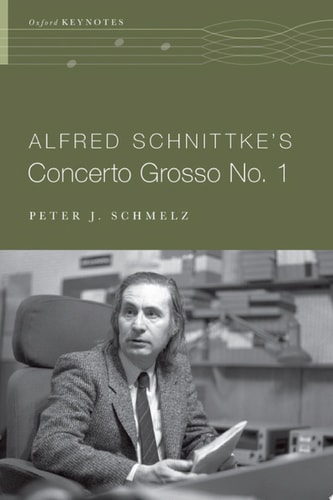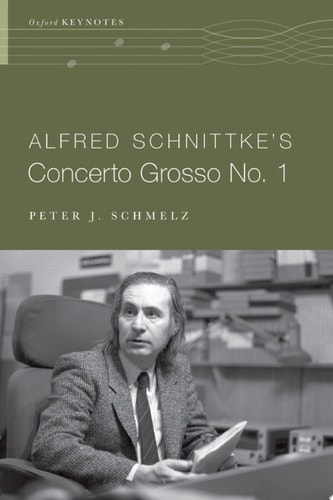
Alfred Schnittke's Concerto Grosso No. 1
0
0
As an Amazon Associate and affiliate partner, Menrva Books earns from qualifying purchases. Learn more
Author Description
Concerto Grosso No. 1 Is One Of Alfred Schnittke's Best-known And Most Compelling Works, Sounding The Surface Of Late Soviet Life While Resonating With Contemporary Compositional Currents Around The World Such As Postmodernism. It Marked A Decisive Point In Schnittke's Development Of The Approach He Called Polystylism, Which Aimed To Contain In A Single Composition The Wide Range Of Contemporary Musical Styles, Including Jazz, Pop, Rock, Or Serial Music. Thanks To It And His Other Similar Compositions, Schnittke Became One Of The Most-performed And Most-recorded Living Composers At The End Of The Twentieth Century. Peter J. Schmelz's Alfred Schnittke's Concerto Grosso No. 1 Represents The First Accessible And Comprehensive Study Of This Composition. The Novel Structure Of The Book Engages With The Piece Conceptually, Historically, Musically, And Phenomenologically, With The Six Movements Of The Composition Framing The Six Chapters. Augmenting And Complicating The Insights Of Existing English, Russian, And German Publications On The Concerto Grosso No. 1, The Book Adds New Information From Underused Primary Sources, Including Schnittke's Unpublished Correspondence And His Many Published Interviews. It Engages Further With His Sketches For The Piece, And With Contemporary Soviet Musical Criticism, Resulting In A More Objective, Historical Account Of This Rich, Multifaceted Composition, Its Influences, And Its Impact On Music Making In The Ussr And Worldwide.
Menrva's Summary
THE THESIS
How does Alfred Schnittke's Concerto Grosso No. 1 function as a microcosm of late Soviet cultural identity and the broader evolution of postmodern musical thought? Peter J. Schmelz, a scholar specializing in Soviet music, utilizes a rigorous analytical framework to examine the composition's historical and aesthetic significance. By synthesizing primary source materials—including unpublished correspondence, sketches, and contemporary Soviet criticism—Schmelz argues that the work serves as a definitive example of Schnittke's polystylism. The study positions the concerto as a pivotal intersection between local Soviet artistic constraints and global compositional trends.
THE SCOPE MAP
What You Will Find
- A movement-by-movement analysis of the six-part structure of Concerto Grosso No. 1.
- An investigation into the concept of polystylism as a response to jazz, rock, and serial music.
- Primary source research derived from Schnittke's personal archives and interviews.
Scope Limits
- The study focuses primarily on the specific composition of Concerto Grosso No. 1 rather than a full biography of the composer.
- The text does not provide an exhaustive catalog of Schnittke's entire body of work.
THE AUTHORITY PERSPECTIVE
Scholars and musicologists recognize this work as a foundational study for understanding the intersection of late Soviet politics and avant-garde composition. Readers frequently note the academic density of the prose, which provides a comprehensive resource for both students and specialists in twentieth-century music.
Page Count:
128
Publication Date:
2019-01-01
Publisher:
Oxford University Press
ISBN-10:
0190653736
ISBN-13:
9780190653736
Music
Music History
Musicology
Soviet Studies