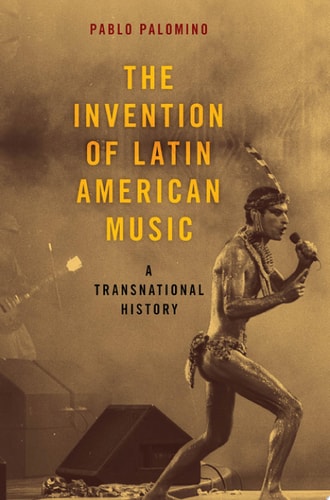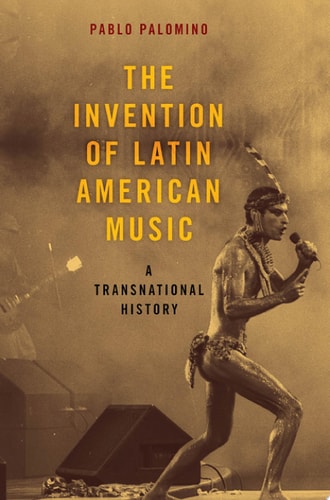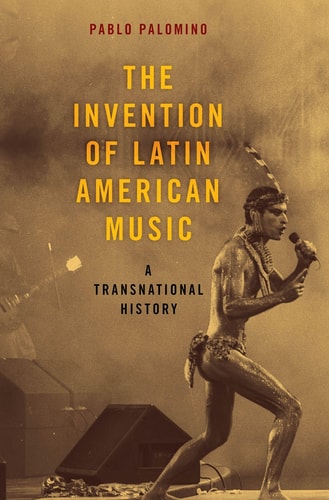
The Invention of Latin American Music: A Transnational History
0
0
As an Amazon Associate and affiliate partner, Menrva Books earns from qualifying purchases. Learn more
Author Description
The ethnically and geographically heterogeneous countries that comprise Latin America have each produced music in unique styles and genres - but how and why have these disparate musical streams come to fall under the single category of "Latin American music"? Reconstructing how this category came to be, author Pablo Palomino tells the dynamic history of the modernization of musical practices in Latin America. He focuses on the intellectual, commercial, musicological, and diplomatic actors that spurred these changes in the region between the 1920s and the 1960s, offering a transnational story based on primary sources from countries in and outside of Latin America. The Invention of Latin American Music portrays music as the field where, for the first time, the cultural idea of Latin America disseminated through and beyond the region, connecting the culture and music of the region to the wider, global culture, promoting the now-established notion of Latin America as a single musical market. Palomino explores multiple interconnected narratives throughout, pairing popular and specialist traveling musicians, commercial investments and repertoires, unionization and musicology, and music pedagogy and Pan American diplomacy. Uncovering remarkable transnational networks far from a Western cultural center, The Invention of Latin American Music firmly asserts that the democratic legitimacy and massive reach of Latin American identity and modernization explain the spread and success of Latin American music.
Menrva's Summary
THE THESIS
This book investigates the historical processes and institutional actors that constructed the singular category of 'Latin American music' from disparate regional traditions. Pablo Palomino, a scholar of Latin American history, utilizes a transnational framework to analyze how intellectual, commercial, and diplomatic networks modernized musical practices between the 1920s and the 1960s. By examining primary sources from both within and outside the region, the author argues that the concept of a unified Latin American musical market was a deliberate cultural and economic project.
THE SCOPE MAP
What You Will Find
- Analysis of the period between 1920 and 1960 regarding musical modernization.
- Examination of the roles of musicologists, union organizers, and Pan American diplomats.
- Investigation into the commercialization and pedagogical standardization of regional genres.
- Evidence drawn from transnational archives and primary source documentation.
Scope Limits
- Does not provide a comprehensive history of individual indigenous or folk musical styles.
- Focuses primarily on the institutional and intellectual construction of the category rather than a technical musicological analysis of sound.
THE AUTHORITY PERSPECTIVE
Scholars in the field of musicology and Latin American studies identify this work as a significant contribution to understanding the intersection of cultural identity and global market formation. Readers frequently note the academic rigor of the research and the clarity with which the author connects disparate historical threads into a cohesive narrative.
Page Count:
272
Publication Date:
2020-05-12
Publisher:
Oxford University Press
ISBN-10:
019068741X
ISBN-13:
9780190687410
Musicology
Transnational History
Political Aspects
American Studies
Cultural History
Regionalism
Music History