
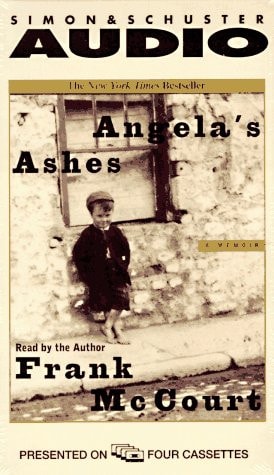
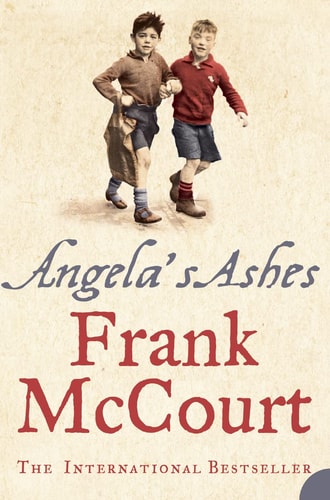
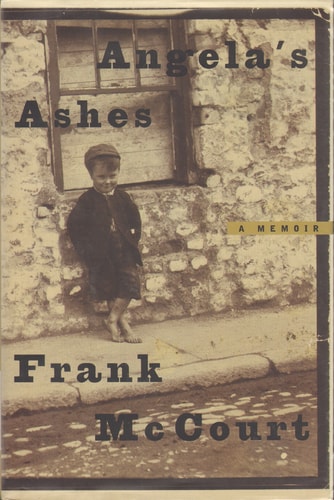
Angela's Ashes
0
0
As an Amazon Associate and affiliate partner, Menrva Books earns from qualifying purchases. Learn more
Author Description
When I look back on my childhood I wonder how I managed to survive at all. It was, of course, a miserable childhood: the happy childhood is hardly worth your while. Worse than the ordinary miserable childhood is the miserable Irish childhood, and worse yet is the miserable Irish Catholic childhood. So begins the luminous memoir of Frank McCourt, born in Depression-era Brooklyn to recent Irish immigrants and raised in the slums of Limerick, Ireland. in the 1930s and 40s. Frank's mother, Angela, has no money to feed the children since Frank's father, Malachy, rarely works, and when he does he drinks his wages. Yet Malachy -- exasperating, irresponsible and beguiling -- does nurture in Frank an appetite for the one thing he can provide: a story. Frank lives for his father's tales of Cuchulain, who saved Ireland, and of the Angel on the Seventh Step, who brings his mother babies. Perhaps it is story that accounts for Frank's survival. Wearing rags for diapers, begging a pig's head for Christmas dinner and gathering coal from the roadside to light a fire, Frank endures poverty, near-starvation and the casual cruelty of relatives and neighbors -- yet lives to tell his tale with eloquence, exuberance and remarkable forgiveness. - Jacket flap.
Menrva's Summary
THE THESIS
This memoir investigates the resilience of the human spirit when confronted with the crushing realities of extreme poverty, systemic neglect, and the cycle of alcoholism in mid-twentieth-century Ireland. Frank McCourt utilizes his own formative years in the slums of Limerick as a primary case study to examine how storytelling and language serve as essential survival mechanisms. By documenting the stark economic and social conditions of the 1930s and 40s, the author constructs a narrative framework that balances the harshness of his upbringing with a retrospective, often wry, perspective on his family's struggle for dignity.
THE SCOPE MAP
What You Will Find
- Detailed accounts of Depression-era living conditions in Brooklyn and Limerick.
- Analysis of the socio-economic impact of Irish Catholic culture on family dynamics.
- First-person narrative documentation of childhood survival strategies amidst near-starvation.
- Exploration of the role of oral tradition and mythology in shaping a child's worldview.
THE AUTHORITY PERSPECTIVE
This work is widely regarded as a significant contribution to the genre of memoir, noted for its unflinching portrayal of deprivation and its distinct, lyrical narrative voice. The text is frequently studied for its ability to maintain a balance between objective historical observation and subjective, deeply personal reflection.
Page Count:
426
Publication Date:
1996-09-01
Publisher:
Easton Press
ISBN-10:
0002257343
ISBN-13:
9780002257343
Memoir
Autobiography
Biography
Katolicisme
Socialrealisme
Historical
Irland
Ireland
Community & Culture
Poverty
Community Tags
Other Editions(6)

Similar Books














Reader Comments
Share Your Thoughts
No comments yet. Be the first to share your thoughts!