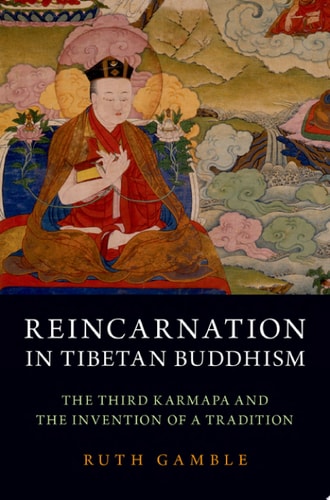
Reincarnation in Tibetan Buddhism
0
0
As an Amazon Associate and affiliate partner, Menrva Books earns from qualifying purchases. Learn more
Author Description
Reincarnation In Tibetan Buddhism Examines How The Third Karmapa Hierarch, Rangjung Dorjé (1284-1339) Transformed Reincarnation From A Belief Into A Lasting Tibetan Institution. Born The Son Of An Itinerant, Low-caste Potter, Rangjung Dorjé Went On To Become A Foundational Figure In Tibetan Buddhism And A Teacher Of The Last Mongolian Emperor. He Became Renowned For His Contributions To Buddhist Philosophy, Literature, Astrology, Medicine, Architecture, Sacred Geography And Manuscript Production. But, As Ruth Gamble Demonstrates, His Most Important Legacy Was The Transformation Of The Karmapa Reincarnation Lineage To Ensure That, After His Death, Subsequent Karmapas Were Able To Assume Power In The Religious Institutions He Had Led. The Inheritance Model Of Reincarnation Instituted By Rangjung Dorjé Changed The Tibetan Plateau's Power Relations, Which Until That Time Had Been Based On Family Associations, And Created A Precedent For Later Reincarnate Institutions, Including That Of The Dalai Lamas. Drawing On Rangjung Dorjé's Hitherto Un-translated Autobiographies And Autobiographical Songs, This Book Shows That His Reinvention Of Reincarnation Was A Self-conscious And Multi-faceted Project, Made Possible By Rangjung Dorjé's Cultural, Social, And Political Standing And Specific Historical And Geographical Circumstances. Exploring This Combination Of Agency And Historical Coincidence, This Is The First Full-length Study Of The Development Of The Reincarnation Institution.
Menrva's Summary
THE THESIS
How did the Third Karmapa, Rangjung Dorjé, transition reincarnation from a religious belief into a formalized, institutionalized system of power within Tibetan Buddhism? Ruth Gamble, a scholar of Tibetan history and culture, investigates this transformation by analyzing the life and works of Rangjung Dorjé (1284-1339). By utilizing previously untranslated autobiographical texts and songs, Gamble argues that the institutionalization of reincarnation was a deliberate, multifaceted project shaped by the Karmapa's unique social standing and the specific political landscape of the Tibetan Plateau.
THE SCOPE MAP
What You Will Find
- Historical analysis of the 13th and 14th-century Tibetan political and religious power structures.
- Examination of the inheritance model of reincarnation as a mechanism for institutional continuity.
- Analysis of primary source material including autobiographies and autobiographical songs of the Third Karmapa.
Scope Limits
- The study focuses primarily on the development of the Karmapa lineage and does not provide an exhaustive history of all Tibetan reincarnation traditions.
- The text is limited to the specific historical and geographical context of Rangjung Dorjé's life and influence.
THE AUTHORITY PERSPECTIVE
Scholars and historians of Tibetan Buddhism recognize this work as a significant contribution to understanding the origins of the reincarnation institution. Readers frequently note the academic rigor and the depth of the primary source analysis provided by the author.
Page Count:
384
Publication Date:
2018-01-01
Publisher:
Oxford University Press
ISBN-10:
019069078X
ISBN-13:
9780190690786
Biography
Philosophy
History
Religion
Buddhism
Community Tags
Similar Books