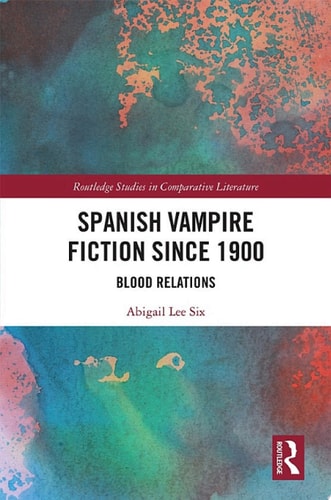
Spanish Vampire Fiction since 1900
0
0
As an Amazon Associate and affiliate partner, Menrva Books earns from qualifying purchases. Learn more
Author Description
Spanish Vampire Fiction since 1900: Blood Relations, as that subtitle suggests, makes the case for considering Spanish vampire fiction an index of the complex relationship between intercultural phenomena and the specifics of a time, place, and author. Supernatural beings that drink blood are found in folklore worldwide, Spain included, and writers ranging from the most canonical to the most marginal have written vampire stories, Spanish ones included too. When they do, they choose between various strategies of characterization or blend different ones together. How much will they draw on conventions of the transnational corpus? Are their vampires to be local or foreign; alluring or repulsive; pitiable or pure evil, for instance? Decisions like these determine the messages texts carry and, when made by Spanish authors, may reveal aspects of their culture with striking candidness, perhaps because the fantasy premise seems to give the false sense of security that this is harmless escapism and, since metaphorical meaning is implicit, it is open to argument and, if necessary, denial. Part I gives a chronological text-by-text appreciation of all the texts included in this volume, many of them little known even to Hispanists and few if any to non-Spanish Gothic scholars. It also provides a plot summary and brief background on the author of each. These entries are free-standing and designed to be consulted for reference or read together to give a sense of the evolution of the paradigm since 1900. Part II considers the corpus comparatively, first with regard to its relationship to folklore and religion and then contagion and transmission. Spanish Vampire Fiction since 1900: Blood Relations will be of interest to Anglophone Gothic scholars who want to develop their knowledge of the Spanish dimension of the mode and to Hispanists who want to look at some canonical texts and authors from a new perspective but also gain an awareness of some interesting and decidedly non-canonical
Menrva's Summary
THE THESIS
This volume investigates the evolution and cultural significance of Spanish vampire fiction from 1900 to the present day. Abigail Lee Six, an expert in Gothic studies, examines a range of Spanish vampire texts, many of which are little-known. The book analyzes how these narratives engage with transnational Gothic conventions, explore local cultural specificities, and reflect societal anxieties through the lens of supernatural beings. It argues that Spanish vampire fiction serves as a unique index for understanding the interplay between intercultural phenomena and the particularities of time, place, and authorial intent.
THE SCOPE MAP
- Chronological analysis of Spanish vampire fiction texts since 1900.
- Plot summaries and author backgrounds for each featured text.
- Exploration of characterization strategies: local vs. foreign vampires, allure vs. repulsion, pity vs. evil.
- Comparative analysis of the corpus in relation to folklore and religion.
- Examination of themes of contagion and transmission within Spanish vampire narratives.
- Consideration of the relationship between intercultural phenomena and specific Spanish contexts.
- Insights into how vampire fiction can reveal cultural aspects through seemingly harmless fantasy.
THE AUTHORITY PERSPECTIVE
This volume is positioned as a valuable resource for Anglophone Gothic scholars seeking to expand their knowledge of the Spanish contribution to the Gothic mode. It also offers Hispanists a fresh perspective on canonical texts and authors, while introducing them to significant non-canonical works. The book's detailed textual analysis and comparative approach are designed to illuminate the unique cultural dialogues embedded within Spanish vampire fiction. Its chronological and thematic organization makes it suitable for both reference and sequential reading, charting the development of the genre in Spain.
Page Count:
238
Publication Date:
2019-02-18
Publisher:
Taylor & Francis
ISBN-10:
1351398180
ISBN-13:
9781351398183
Non-Fiction
Literary Fiction
Spanish literature
Literary Criticism
Gothic Studies