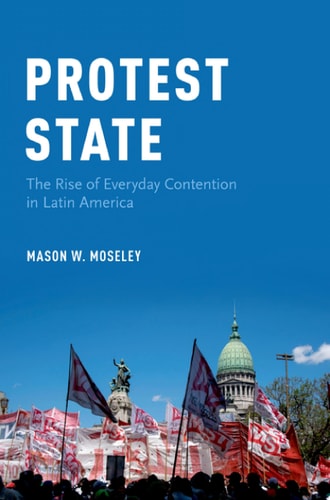
Protest State
0
0
As an Amazon Associate and affiliate partner, Menrva Books earns from qualifying purchases. Learn more
Author Description
Why Is Social Protest A Normal, Almost Routine Form Of Political Participation In Certain Latin American Democracies, But Not Others? In Light Of Surging Protests In Countries Like Argentina, Brazil, And Peru, This Book Answers This Question Through A Focus On Recent Trends In The Quality Of Governance And Socioeconomic Development In The Region. Specifically, It Argues That Increasingly Engaged Citizenries -- Forged By Economic Growth And Technological Advances -- Coupled With Dysfunctional Political Institutions Have Fueled More Radical Modes Of Participation In Latin America, As Citizens' Demands For Government Responsiveness Have Overwhelmed Many Regimes' Capacity To Provide It. Where Weak Institutions And Politically Engaged Citizenries Collide, Countries Can Morph Into Protest States, Where Contentious Participation Becomes So Common As To Render It A Conventional Characteristic Of Everyday Political Life. Drawing On Cross-national Surveys From Latin America And A Case Study Of Argentina, Which Includes A Rich Dataset Of Protest Events And Dozens Of Interviews With Political Elites And Citizen Activists, Mason W. Moseley Tests His Explanation Against Other Leading Theories In The Contentious Politics Literature. But Rather Than Emphasizing How Worsening Economic Conditions And Mounting Grievances Fuel Protest, This Book Builds The Case That It Is Actually The Improvement Of Economic Conditions Amidst Low Quality Political Institutions That Lies At The Root Of Surging Contention In The Region. Protest State Offers A Comprehensive Study Of One Of The Most Intriguing Puzzles In Latin American Politics Today: In The Midst Of An Unprecedented Era Of Democratic Governments And Economic Prosperity, Why Are So Many People Protesting?
Menrva's Summary
THE THESIS
This book investigates why social protest has become a routine and normalized form of political participation in specific Latin American democracies while remaining less prevalent in others. Mason W. Moseley, a scholar of Latin American politics, utilizes a combination of cross-national survey data and a focused case study of Argentina to challenge conventional wisdom. He argues that the root cause of increased contention is not economic decline, but rather the intersection of improved socioeconomic conditions and dysfunctional political institutions that fail to meet the demands of an increasingly engaged citizenry.
THE SCOPE MAP
What You Will Find
- Quantitative analysis of cross-national survey data from across Latin America.
- A detailed case study of Argentina featuring a unique dataset of protest events.
- Qualitative insights derived from dozens of interviews with political elites and citizen activists.
Scope Limits
- The analysis is geographically restricted to the Latin American region.
- The study focuses primarily on the relationship between institutional quality and citizen engagement rather than broader global protest movements.
THE AUTHORITY PERSPECTIVE
Experts in comparative politics identify this work as a significant contribution to the literature on contentious politics by reframing the relationship between prosperity and stability. Readers frequently note the clarity of the author's argument and the rigor of the empirical evidence presented in the case study.
Page Count:
240
Publication Date:
2018-01-01
Publisher:
Oxford University Press
ISBN-10:
0190694017
ISBN-13:
9780190694012
Comparative Politics
Sociology
Governance
American Studies
Community Tags
Similar Books