Painting Antiquity: Ancient Egypt in the Art of Lawrence Alma-Tadema, Edward Poynter and Edwin Long
0
0
As an Amazon Associate and affiliate partner, Menrva Books earns from qualifying purchases. Learn more
Author Description
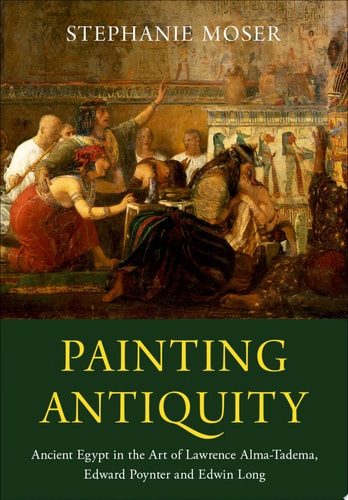
Inspired by newly discovered antiquities of the ancient world exhibited in the museums of Europe and celebrated in the illustrated press of the day, the leading British history painters Sir Lawrence Alma-Tadema, Sir Edward Poynter and Edwin Long created a striking body of artworks in which archaeology was a prime focus. Of the growing community of historicist and classicist painters in mid-nineteenth century Britain, these artists expressed a passion for archaeological detail, and their aesthetic engagement with ancient material culture played a key role in fostering the enthusiasm for antiquity with wider audiences. Painting Antiquity explores the archaeological dimension of their paintings in detail, addressing how the relationship these artists had with ancient objects represented a distinctive and important development in the cultural reception of the past. The book also considers the inspiration for the movement defined as "archaeological genre painting," the artistic and historic context for this new style, the archaeological sources upon which the artworks were based, and the critical reception of the paintings in the world of Victorian art criticism. Alongside extensive visual evidence, rendered here in both striking color and black-and-white imagery, Stephanie Moser shows how this artistic practice influenced our understanding of ancient Egypt. Further, she argues that these paintings affected the development of archaeology as a discipline, revealing how the painters had an intense engagement with archaeology, representing artefacts in extraordinary detail and promoting the use of ancient material culture according to an aesthetic agenda. The issues raised by placing importance on concepts of beauty and decoration, over values such as rarity, function, or historical use continue to divide archaeologists and art historians in the present day. Ultimately, by demonstrating how the artistic dialogue with antiquity contributed to defining it, Painting Antiquity
Menrva's Summary
THE THESIS
This book investigates how Victorian history painters utilized archaeological discoveries to construct a specific, aestheticized vision of ancient Egypt that influenced both public perception and the development of archaeology as a discipline. Stephanie Moser, an expert in the history of archaeology and visual culture, examines the intersection of mid-nineteenth-century British art and the burgeoning field of Egyptology. She argues that painters like Alma-Tadema, Poynter, and Long did not merely depict the past but actively shaped it by prioritizing decorative and aesthetic agendas over strict historical or functional accuracy.
THE SCOPE MAP
What You Will Find
- Analysis of the archaeological genre painting movement in Victorian Britain.
- Examination of the relationship between museum exhibitions, illustrated press, and artistic production.
- Case studies of works by Sir Lawrence Alma-Tadema, Sir Edward Poynter, and Edwin Long.
- Discussion of the tension between aesthetic beauty and archaeological authenticity.
Scope Limits
- The text does not provide a comprehensive history of all Victorian Orientalist art.
- It does not serve as a technical manual for archaeological excavation techniques.
THE AUTHORITY PERSPECTIVE
Scholars and art historians recognize this work as a significant contribution to the study of how visual culture informs the public understanding of archaeological sites. Readers frequently note the academic rigor of the prose and the depth of the visual analysis provided by the author.
Page Count:
622
Publication Date:
2019-01-01
Publisher:
Oxford University Press
ISBN-10:
0190697040
ISBN-13:
9780190697044
History
Art History
Ancient History
Humanities
Cultural History
Egyptology
Archaeology
Community Tags
Other Editions(2)
Similar Books
Reader Comments
Share Your Thoughts
No comments yet. Be the first to share your thoughts!