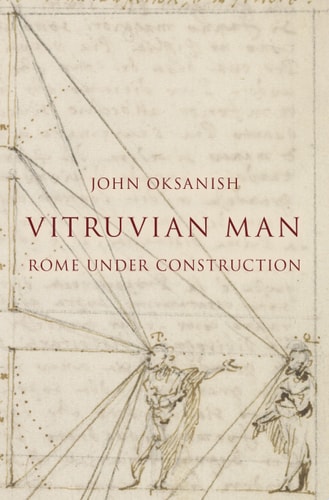
Vitruvian Man: Rome under Construction
0
0
As an Amazon Associate and affiliate partner, Menrva Books earns from qualifying purchases. Learn more
Author Description
Professionalism is political. This book offers a new assessment of the Roman architect Vitruvius and his treatise, On Architecture, dedicated to Augustus in the 20s BCE. Once reviled by scholars, Vitruvius emerges as an imperial expert par excellence when read alongside literary coevals through an intertextual lens. No building of Vitruvius' name survives from antiquity, but his treatise remains a formidable literary construction that partakes of Rome's vibrant textual culture. The book explores Vitruvius' portrait of the ideal architect as an imposing "Vitruvian man" at the dawn of Augustus' empire. In direct dialogue with his republican model, Cicero's ideal orator, the architect embodies a distinctly imperial civic ethos in which technically skilled partisans supersede old elites as guarantors of Augustan authority. Vitruvius promises to shape not only the emperor's legacy with architecture, but also the notion of a Roman citizen through his ideal architect.
Menrva's Summary
THE THESIS
How does Vitruvius’ treatise, On Architecture, function as a political instrument for establishing authority during the early Augustan period? John Oksanish, a scholar of classical literature and Roman culture, examines Vitruvius not merely as a builder, but as a sophisticated author operating within the literary landscape of the early Roman Empire. By analyzing the text alongside contemporary works, Oksanish argues that Vitruvius constructs an ideal architect who serves as a proxy for imperial values, effectively positioning technical expertise as a new form of civic leadership that rivals the traditional influence of the republican elite.
THE SCOPE MAP
What You Will Find
- Analysis of Vitruvius’ On Architecture in the context of Augustan political propaganda.
- Comparative study between the Vitruvian architect and Cicero’s ideal orator.
- Examination of the intersection between Roman textual culture and architectural theory.
- Investigation into the shift from republican aristocratic power to imperial technocratic authority.
Scope Limits
- The book does not provide a biography of Vitruvius’ physical life or a catalog of his actual construction projects.
- The analysis focuses primarily on the literary and political dimensions of the treatise rather than the technical engineering specifications of Roman building practices.
THE AUTHORITY PERSPECTIVE
Scholars in the field of classical studies recognize this work as a significant re-evaluation of Vitruvius, moving beyond traditional architectural history to focus on his role as a political author. Readers frequently note the academic density of the prose, which assumes a foundational knowledge of Roman history and Latin literary traditions.
Page Count:
264
Publication Date:
2019-01-01
Publisher:
Oxford University Press
ISBN-10:
0190697008
ISBN-13:
9780190697006
History
Architecture
Literary Criticism
Roman Empire
Humanities
Community Tags
Similar Books