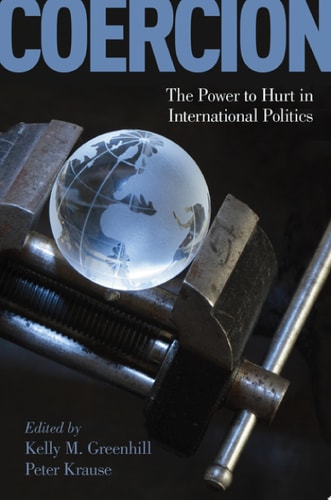
Coercion
0
0
As an Amazon Associate and affiliate partner, Menrva Books earns from qualifying purchases. Learn more
Author Description
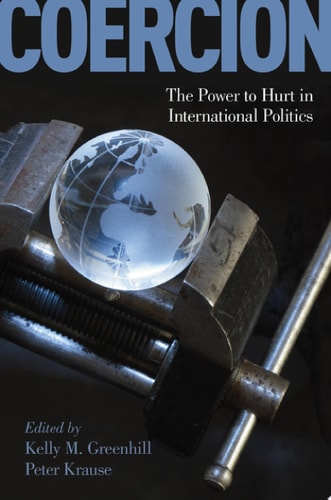
From The Rising Significance Of Non-state Actors To The Increasing Influence Of Regional Powers, The Nature And Conduct Of International Politics Has Arguably Changed Dramatically Since The Height Of The Cold War. Yet Much Of The Literature On Deterrence And Compellence Continues To Draw (whether Implicitly Or Explicitly) Upon Assumptions And Precepts Formulated In-and Predicated Upon-politics In A State-centric, Bipolar World. Coercion Moves Beyond These Somewhat Hidebound Premises And Examines The Critical Issue Of Coercion In The 21st Century, With A Particular Focus On New Actors, Strategies And Objectives In This Very Old Bargaining Game. The Chapters In This Volume Examine Intra-state, Inter-state, And Transnational Coercion And Deterrence As Well As Both Military And Non-military Instruments Of Persuasion, Thus Expanding Our Understanding Of Coercion For Conflict In The 21st Century. Scholars Have Analyzed The Causes, Dynamics, And Effects Of Coercion For Decades, But Previous Works Have Principally Focused On A Single State Employing Conventional Military Means To Pressure Another State To Alter Its Behavior. In Contrast, This Volume Captures Fresh Developments, Both Theoretical And Policy Relevant. This Chapters In This Volume Focus On Tools (terrorism, Sanctions, Drones, Cyber Warfare, Intelligence, And Forced Migration), Actors (insurgents, Social Movements, And Ngos) And Mechanisms (trilateral Coercion, Diplomatic And Economic Isolation, Foreign-imposed Regime Change, Coercion Of Nuclear Proliferators, And Two-level Games) That Have Become More Prominent In Recent Years, But Which Have Yet To Be Extensively Or Systematically Addressed In Either Academic Or Policy Literatures.
Menrva's Summary
THE THESIS
This volume investigates how the mechanisms of coercion and deterrence have evolved in the 21st century beyond the traditional state-centric, bipolar frameworks of the Cold War era. Editors Kelly M. Greenhill and Peter Krause, both established scholars in international security, curate a collection of essays that analyze how new actors, such as non-state entities and regional powers, utilize diverse instruments of persuasion to influence international politics. The work argues that contemporary bargaining games require a broader analytical lens that accounts for both military and non-military tools of pressure.
THE SCOPE MAP
What You Will Find
- Analysis of modern coercive tools including cyber warfare, economic sanctions, drone technology, and forced migration.
- Examination of non-state actors such as NGOs, insurgent groups, and social movements.
- Theoretical frameworks for trilateral coercion, two-level games, and foreign-imposed regime change.
Scope Limits
- The text does not focus on traditional, state-on-state conventional military conflict as the primary mode of analysis.
- It excludes historical case studies that rely solely on Cold War-era bipolar power dynamics.
THE AUTHORITY PERSPECTIVE
Experts identify this collection as a necessary update to classical deterrence theory, noting its utility for both academic researchers and policy practitioners. Readers frequently highlight the text's success in bridging the gap between theoretical political science and the practical realities of modern international security.
Page Count:
400
Publication Date:
2017-01-01
Publisher:
Oxford University Press
ISBN-10:
0190846356
ISBN-13:
9780190846350
International relations
Security Studies
Geopolitics
Diplomacy
Military Strategy
Community Tags
Similar Books