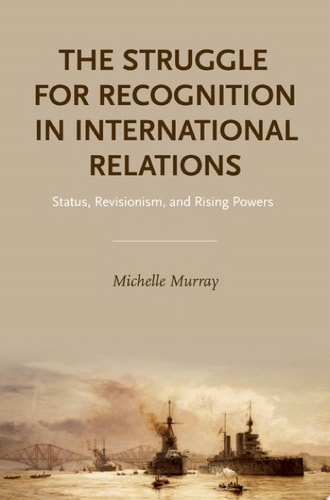
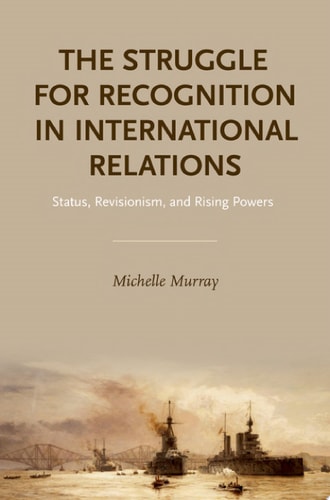
The Struggle for Recognition in International Relations
0
0
As an Amazon Associate and affiliate partner, Menrva Books earns from qualifying purchases. Learn more
Author Description
How Can Established Powers Manage The Peaceful Rise Of New Great Powers? With The Struggle For Recognition In International Relations, Michelle Murray Offers A New Answer To This Perennial Question In International Relations, Arguing That Power Transitions Are Principally Social Phenomena Whereby Rising Powers Struggle To Obtain Recognition As World Powers. At The Center Of Great Power Identity Formation Is The Acquisition Of Particular Symbolic Capabilities-such As Battleships, Aircraft Carriers Or Nuclear Weapons-that Are Representative Of Great Power Status And Which Allow Rising Powers To Experience Their Uncertain Social Status As A Brute Fact. When A Rising Power Is Recognized, This Power Acquisition Is Considered Legitimate And Its Status In The International Order Secured, Leading To A Peaceful Power Transition. If A Rising Power Is Misrecognized, Its Assertive Foreign Policy Is Perceived To Be For Revisionist Purposes, Which Must Be Contained By The Established Powers. Revisionism-rather Than The Product Of A Material Power Structure That Encourages Aggression Or Domestic Political Struggles-is A Social Construct That Emerges Through A Rising Power's Social Interactions With The Established Powers As It Attempts To Gain Recognition Of Its Identity. To Highlight The Explanatory Reach Of The Argument, Murray Compares The United States And Imperial Germany's Contemporaneous Rise To World Power Status At The Turn Of The Twentieth Century. Whereas Successful Acts Of Recognition Constructed American Expansionism As Legitimate Thereby Facilitating Its Peaceful Rise, Ongoing Misrecognition Increased German Status Insecurity, Constructing It As A Revisionist Threat To The International Order. The Question Of Peaceful Power Transition Has Taken On Increased Salience In Recent Years With The Emergence Of China As An Economic And Military Rival Of The United States. Highlighting The Social Dynamics Of Power Transitions, The Struggle For Recognition In International Relations.
Menrva's Summary
THE THESIS
How can established powers manage the peaceful rise of new great powers through the lens of social recognition? Michelle Murray, a scholar of international relations, argues that power transitions are primarily social phenomena rather than purely material ones. She posits that rising powers seek legitimacy through the acquisition of symbolic military capabilities, and that the success or failure of this recognition process determines whether a transition remains peaceful or becomes conflict-ridden.
THE SCOPE MAP
What You Will Find
- A social constructivist framework for analyzing great power identity formation.
- Comparative historical analysis of the United States and Imperial Germany at the turn of the twentieth century.
- Examination of symbolic military assets like battleships and nuclear weapons as markers of status.
Scope Limits
- The text does not provide a comprehensive policy manual for contemporary US-China relations.
- It does not focus on domestic economic policy or internal political structures as primary drivers of foreign policy.
THE AUTHORITY PERSPECTIVE
Experts in international relations identify this work as a significant contribution to constructivist theory regarding power transitions. Readers frequently note the academic density of the prose and the rigor of the historical comparison between the American and German experiences.
Page Count:
272
Publication Date:
2018-01-01
Publisher:
Oxford University Press
ISBN-10:
0190878916
ISBN-13:
9780190878917
History
Geopolitics
Diplomacy
International relations
Social Theory
Community Tags
Other Editions(2)

Similar Books





Reader Comments
Share Your Thoughts
No comments yet. Be the first to share your thoughts!