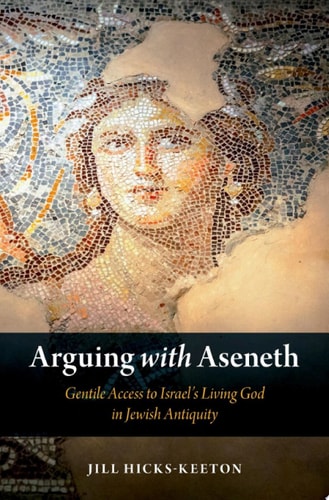
Arguing with Aseneth: Gentile Access to Israel's Living God in Jewish Antiquity
0
0
As an Amazon Associate and affiliate partner, Menrva Books earns from qualifying purchases. Learn more
Author Description
Arguing with Aseneth shows how the ancient Jewish romance known as Joseph and Aseneth moves a minor character in Genesis from obscurity to renown, weaving a new story whose main purpose was to intervene in ancient Jewish debates surrounding gentile access to Israel's God. Written in Greco-Roman Egypt around the turn of the era, Joseph and Aseneth combines the genre of the ancient Greek novel with scriptural characters from the story of Joseph as it retells Israel's mythic past to negotiate communal boundaries in its own present. With attention to the ways in which Aseneth's tale "remixes" Genesis, wrestles with Deuteronomic theology, and adopts prophetic visions of the future, Arguing with Aseneth demonstrates that this ancient novel inscribes into Israel's sacred narrative a precedent for gentile inclusion in the people belonging to Israel's God. Aseneth is transformed from material mother of the sons of Joseph to a mediator of God's mercy and life to future penitents, Jew and gentile alike. Yet not all Jewish thinkers in antiquity drew boundary lines the same way or in the same place. Arguing with Aseneth traces, then, not only the way in which Joseph and Aseneth affirms the possibility of gentile incorporation but also ways in which other ancient Jewish thinkers, including the apostle Paul, would have argued back, contesting Joseph and Aseneth's very conclusions or offering alternative, competing strategies of inclusion. With its use of a female protagonist, Joseph and Aseneth offers a distinctive model of gentile incorporation--one that eschews lines of patrilineal descent and undermines ethnicity and genealogy as necessary markers of belonging. Such a reading of this narrative shows us that we need to rethink our accounts of how ancient Jewish thinkers, including our earliest example from the Jesus Movement, negotiated who was in and who was out when it came to the people of Israel's God.
Menrva's Summary
THE THESIS
*This book investigates how the ancient Jewish romance Joseph and Aseneth functions as a rhetorical intervention in early debates regarding the inclusion of gentiles within the covenantal community of Israel's God.* Jill Hicks-Keeton, a scholar of early Judaism and Christian origins, utilizes a methodology of literary analysis and historical contextualization to examine how this narrative reinterprets Genesis. She argues that the text offers a specific model of gentile incorporation that challenges traditional reliance on patrilineal descent and ethnic genealogy.
THE SCOPE MAP
What You Will Find
- Analysis of the Greco-Roman novel genre as a vehicle for theological discourse.
- Examination of the narrative's engagement with Deuteronomic theology and prophetic tradition.
- Comparative study of inclusion strategies between Joseph and Aseneth and other ancient thinkers, including the apostle Paul.
Scope Limits
- The study does not provide a comprehensive history of all ancient Jewish conversion practices.
- It focuses primarily on the specific literary and theological arguments within Joseph and Aseneth rather than a broad survey of all Second Temple literature.
THE AUTHORITY PERSPECTIVE
Scholars in the field of Second Temple Judaism and early Christian studies recognize this work as a significant contribution to understanding how ancient texts negotiated communal boundaries. Readers frequently note the academic rigor and the clarity with which the author connects literary analysis to broader historical questions about identity and belonging.
Page Count:
226
Publication Date:
2018-01-01
Publisher:
Oxford University Press
ISBN-10:
0190879017
ISBN-13:
9780190879013
History
Religion
Literary Criticism
Judaism
Biblical teaching
Jewish Studies
Theology
Ancient History
Jewish History
Bibles
Community Tags
Similar Books