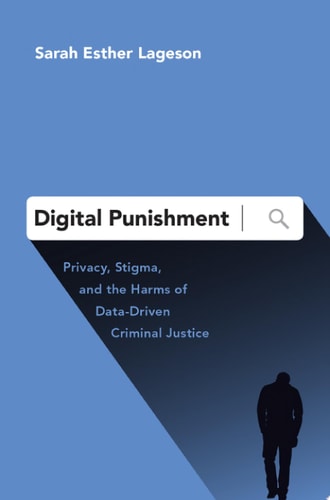
Digital Punishment: Privacy, Stigma, and the Harms of Data-Driven Criminal Justice
0
0
As an Amazon Associate and affiliate partner, Menrva Books earns from qualifying purchases. Learn more
Author Description
The proliferation of data-driven criminal justice operations creates millions of criminal records each year in the United States. Documenting everything from a police stop to a prison sentence, these records take on a digital life of their own as they are collected by law enforcement and courts, posted on government websites, re-posted on social media, online news and mugshot galleries, and bought and sold by data brokers. The result is "digital punishment," where mere suspicion or a brush with the law can have lasting consequences. In Digital Punishment, Sarah Esther Lageson unpacks criminal recordkeeping in the digital age, as busy and overburdened criminal justice agencies turned to technological solutions offered by IT companies over the last two decades. These operations produce a mountain of data, including the names, photographs, and home addresses of people arrested or charged with a crime, transforming millions of paper records into a digital commodity. Regardless of factual or legal guilt, these records rapidly multiply across the private sector background checking and personal data industries. Emboldened by public records laws designed for paper-based systems, criminal record data has become an extremely valuable resource for employers, landlords, and communities to monitor criminal behavior and assess other people. But while transparency laws were originally designed to allow governmental watchdogging, digital punishment has redirected our gaze toward one another. Hundreds of interviews detailed in this book reveal the consequences of digital punishment, as people purposefully opt out of society to cope with privacy and due process violations. As criminal histories impact nearly every aspect of private and civic life, the collateral consequences of even the most minor records are much more than barriers to employment and housing. For the criminal record-holder, the messy entanglement of government bureaucracy is nothing compared to the jurisdiction-less
Menrva's Summary
THE THESIS
This book investigates how the digitization of criminal records creates a system of persistent, inescapable social stigma known as digital punishment. Sarah Esther Lageson, a professor of criminal justice, utilizes extensive qualitative research to examine the intersection of government recordkeeping and private data brokerage. She argues that the transition from paper-based transparency to digital accessibility has fundamentally altered the collateral consequences of criminal justice involvement, effectively creating a permanent digital shadow for millions of individuals.
THE SCOPE MAP
What You Will Find
- Analysis of the growth of the private background check and data broker industries.
- Examination of how public records laws, originally intended for government accountability, are repurposed for private surveillance.
- Qualitative data derived from hundreds of interviews with individuals impacted by digital criminal records.
Scope Limits
- The book focuses primarily on the United States legal and technological landscape.
- It does not provide a technical manual for expunging records or navigating specific legal software.
THE AUTHORITY PERSPECTIVE
Experts in sociology and law recognize this work as a significant contribution to the study of surveillance capitalism and criminal justice reform. Readers frequently note the clarity with which Lageson explains the complex, often opaque mechanisms of the data-driven background check industry.
Page Count:
250
Publication Date:
2020-01-01
Publisher:
Oxford University Press
ISBN-10:
0190872020
ISBN-13:
9780190872021
Sociology
Technology and Society
Digital Rights
Privacy
Criminology
Professional Career & Trade
Community Tags
Similar Books