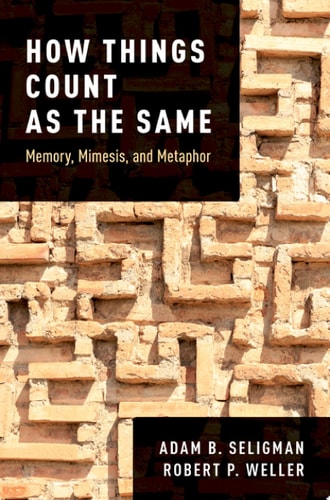
How Things Count As The Same
0
0
As an Amazon Associate and affiliate partner, Menrva Books earns from qualifying purchases. Learn more
Author Description
In Their Third Book Together, Adam B. Seligman And Robert P. Weller Address A Seemingly Simple Question: What Counts As The Same? Given The Myriad Differences That Divide One Individual From Another, Why Do We Recognize Anyone As Somehow Sharing A Common Fate With Us? For That Matter, How Do We Live In Harmony With Groups Who May Not Share The Sense Of A Common Fate? Such Relationships Lie At The Heart Of The Problems Of Pluralism That Increasingly Face So Much Of The World Today. Note That Counting As The Same Differs From Being The Same. Counting As The Same Is Not An Empirical Question About How Much Or How Little One Person Shares With Another Or One Event Shares With A Previous Event. Nothing Is Actually The Same. That Is Why, As Humans, We Construct Sameness All The Time. In The Process, Of Course, We Also Construct Difference. Creating Sameness And Difference Leaves Us With The Perennial Problem Of How To Live With Difference Instead Of Seeing It As A Threat. How Things Count As The Same Suggests That There Are Multiple Ways In Which We Can Count Things As The Same, And That Each Of Them Fosters Different Kinds Of Group Dynamics And Different Sets Of Benefits And Risks For The Creation Of Plural Societies. While There Might Be Many Ways To Understand How People Construct Sameness, Three Stand Out As Especially Important And Form The Focus Of The Book's Analysis: Memory, Mimesis, And Metaphor.
Menrva's Summary
THE THESIS
The authors investigate the mechanisms by which human beings construct social categories of sameness and difference to navigate pluralistic societies. Adam B. Seligman and Robert P. Weller draw upon their backgrounds in sociology and anthropology to examine how individuals perceive shared fates despite inherent differences. They argue that sameness is a social construct rather than an empirical reality, proposing a framework centered on three primary modes of categorization.
THE SCOPE MAP
What You Will Find
- A theoretical framework for understanding social cohesion and pluralism
- Analysis of the roles of memory, mimesis, and metaphor in identity formation
- Exploration of the risks and benefits associated with different methods of constructing group identity
Scope Limits
- The text does not provide a prescriptive guide for resolving specific geopolitical conflicts
- It does not offer a comprehensive history of all sociological theories regarding identity
THE AUTHORITY PERSPECTIVE
Scholars and readers frequently note the academic density of the prose, which requires careful engagement with the authors' conceptual definitions. Experts highlight this as a significant contribution to the study of pluralism, particularly for those interested in the intersection of social theory and human interaction.
Page Count:
320
Publication Date:
2018-01-01
Publisher:
Oxford University Press
ISBN-10:
0190888725
ISBN-13:
9780190888725
Philosophy
Sociology
Community Tags
Similar Books