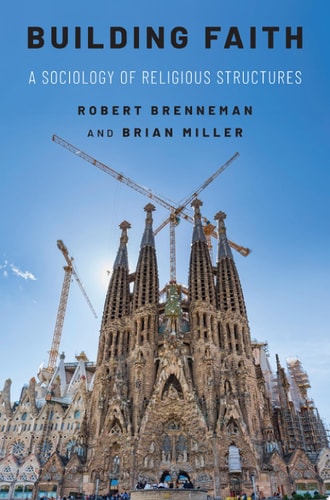
Building Faith: A Sociology of Religious Structures
0
0
As an Amazon Associate and affiliate partner, Menrva Books earns from qualifying purchases. Learn more
Author Description
The social sciences have mostly ignored the role of physical buildings in shaping the social fabric of communities and groups. Although the emerging field of the sociology of architecture has started to pay attention to physical structures, Brenneman and Miller are the first to combine the light of sociological theory and the empirical method in order to understand the impact of physical structures on religious groups that build, transform, and maintain them. Religious buildings not only reflect the groups that build them or use them; these physical structures actually shape and change those who gather and worship there.Religious buildings are all around us. From Wall Street to Main Street, from sublime and historic cathedrals to humble converted storefronts, these buildings shape the global religious landscape, “building faith” among those who worship in them while providing a testament to the shape and duration of the faith of those who built them and those who maintain them. Building Faith explores the social impact of religious buildings in places as diverse as a Chicago suburb and a Guatemalan indigenous Mayan village, all the while asking the questions, “How does space shape community?” and “How do communities shape the spaces that speak for them?”
Menrva's Summary
THE THESIS
This book investigates how physical religious structures actively shape and influence the social dynamics and faith practices of the communities that inhabit them. Authors Robert E. Brenneman and Brian J. Miller utilize sociological theory and empirical research to challenge the traditional academic oversight regarding the role of built environments in religious life. They argue that buildings are not merely passive reflections of a group's identity but are active agents that transform the behaviors and communal bonds of those who worship within them.
THE SCOPE MAP
What You Will Find
- Comparative analysis of religious spaces ranging from historic cathedrals to storefront conversions
- Theoretical framework for the sociology of architecture
- Case studies from diverse geographic locations including Chicago suburbs and Mayan villages in Guatemala
Scope Limits
- Does not provide an exhaustive architectural history of all world religions
- Does not focus on the theological doctrines of the groups studied, but rather on the social impact of their physical environments
THE AUTHORITY PERSPECTIVE
Scholars in the sociology of religion identify this work as a significant contribution to the intersection of spatial studies and communal identity. Readers frequently note the clarity of the authors' methodology in bridging the gap between architectural theory and sociological observation.
Page Count:
208
Publication Date:
2020-01-01
Publisher:
Oxford University Press
ISBN-10:
0190883464
ISBN-13:
9780190883461
Architecture
Religion
Sociology
Technology Design
Professional Career & Trade
Social Science
Community Tags
Similar Books