Escaped Nuns
0
0
As an Amazon Associate and affiliate partner, Menrva Books earns from qualifying purchases. Learn more
Author Description
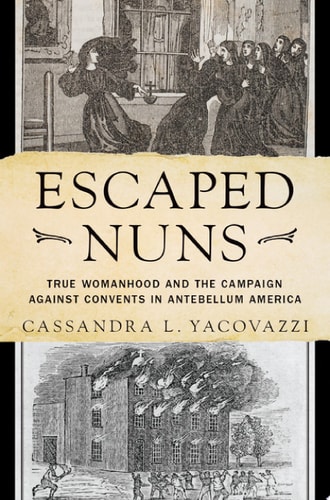
Just Five Weeks After Its Publication In January 1836, Awful Disclosures Of The Hotel Dieu Nunnery, Billed As An Escaped Nun's Shocking Exposé Of Convent Life, Had Already Sold More Than 20,000 Copies. The Book Detailed Gothic-style Horror Stories Of Licentious Priests And Abusive Mothers Superior, Tortured Nuns And Novices, And Infanticide. By The Time The Book Was Revealed To Be A Fiction And The Author, Maria Monk, An Imposter, It Had Already Become One Of The Nineteenth Century's Best-selling Books. In Antebellum America Only One Book, Uncle Tom's Cabin, Outsold It. The Success Of Monk's Book Was No Fluke, But Rather A Part Of A Larger Phenomenon Of Anti-catholic Propaganda, Riots, And Nativist Politics. The Secrecy Of Convents Stood As An Oblique Justification For Suspicion Of Catholics And The Campaigns Against Them, Which Were Intimately Connected With Cultural Concerns Regarding Reform, Religion, Immigration, And, In Particular, The Role Of Women In The Republic. At A Time When The Term Female Virtue Pervaded Popular Rhetoric, The Image Of The Veiled Nun Represented A Threat To The Established American Ideal Of Womanhood. Unable To Marry, She Was Instead A Captive Of A Foreign Foe, A Fallen Woman, A White Slave, And A Foolish Virgin. In The First Half Of The Nineteenth Century, Ministers, Vigilantes, Politicians, And Writers--male And Female--forged This Image Of The Nun, Locking Arms Against Convents. The Result Was A Far-reaching Antebellum Movement That Would Shape Perceptions Of Nuns, And Women More Broadly, In America.
Menrva's Summary
THE THESIS
How did the fabricated narrative of the 'escaped nun' become a central pillar of anti-Catholic sentiment and gender politics in antebellum America? Cassandra L. Yacovazzi, a historian specializing in American religious and gender history, examines the cultural phenomenon surrounding the 1836 publication of Maria Monk's 'Awful Disclosures.' By analyzing the intersection of nativist politics, religious anxiety, and shifting ideals of womanhood, the author argues that the figure of the nun served as a potent symbol for broader societal fears regarding immigration and female autonomy. The work utilizes a wide array of primary sources, including pamphlets, sermons, and political rhetoric, to reconstruct the climate that allowed such sensationalist literature to thrive.
THE SCOPE MAP
What You Will Find
- Analysis of the 'Awful Disclosures' publishing phenomenon and its impact on 19th-century American bestseller lists.
- Examination of the intersection between anti-Catholic propaganda and nativist political movements.
- Exploration of the cultural construction of 'female virtue' and how the image of the nun challenged these ideals.
- Historical context regarding the role of women in the early American Republic.
Scope Limits
- The text focuses primarily on the American context and does not provide an exhaustive history of European convent life.
- The study does not attempt to provide a theological defense or critique of Catholicism, but rather focuses on the sociological and political reception of anti-Catholic tropes.
THE AUTHORITY PERSPECTIVE
Scholars and historians recognize this work as a significant contribution to the study of 19th-century American religious prejudice and gender dynamics. Readers frequently note the academic rigor of the prose and the author's ability to connect obscure historical pamphlets to larger national political trends.
Page Count:
320
Publication Date:
2018-01-01
Publisher:
Oxford University Press
ISBN-10:
0190881011
ISBN-13:
9780190881016
History
19th Century
American History
Womens Studies
Religious History
Community Tags
Similar Books