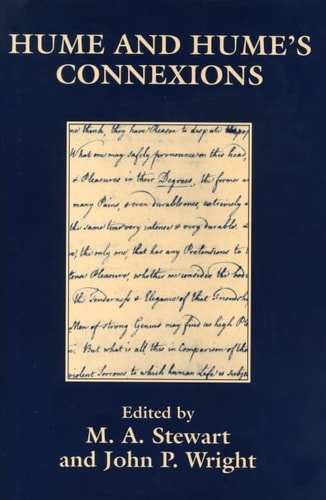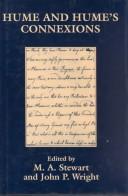
Hume and Hume's Connexions
0
0
As an Amazon Associate and affiliate partner, Menrva Books earns from qualifying purchases. Learn more
Author Description
Presenting significant new research particularly on the moral and religious philosophy of David Hume, this volume illustrates the importance of intellectual context in understanding the work and career of one of the most important thinkers of the eighteenth century. Distinctive in its reappraisal of the influence of John Locke, Francis Hutcheson, and others, it examines how Hume reacted to, and in turn affected, other thinkers whose views, like his own, were bound up with specific philosophical, theological, and scientific traditions and commitments. The essays fall into three broad groups. The first looks at Hume's work as a moral philosopher, re-evaluating his place in the sceptical, utilitarian, and natural-law traditions. The second reassesses his work in moral psychology and the science of the mind in the light of new research on seventeenth- and eighteenth-century sources. A final group, which examines Hume's critique of religion in its literary, historical, and philosophical aspects, includes an edited transcription of a significant new manuscript on the problem of evil.
Menrva's Summary
THE THESIS
This volume investigates the philosophical, theological, and scientific contexts that shaped David Hume's thought and career. It re-evaluates Hume's moral and religious philosophy through significant new research, particularly focusing on his intellectual lineage and reactions to contemporaries like John Locke and Francis Hutcheson. The essays explore Hume's engagement with sceptical, utilitarian, and natural-law traditions, as well as his work in moral psychology informed by seventeenth- and eighteenth-century sources. A final section delves into his critique of religion, including a new manuscript on the problem of evil.
THE SCOPE MAP
- Re-evaluation of Hume's moral philosophy within sceptical, utilitarian, and natural-law traditions.
- Analysis of Hume's moral psychology and the science of the mind, drawing on new research into historical sources.
- Examination of Hume's critique of religion, considering its literary, historical, and philosophical dimensions.
- Inclusion of an edited transcription of a new manuscript concerning the problem of evil.
- Exploration of the influence of John Locke and Francis Hutcheson on Hume's thought.
- Discussion of the specific philosophical, theological, and scientific commitments of Hume and his contemporaries.
THE AUTHORITY PERSPECTIVE
The essays in this volume present significant new research, particularly on David Hume's moral and religious philosophy, highlighting the importance of intellectual context. The collection reappraises Hume's connections to thinkers like John Locke and Francis Hutcheson, examining his place within various philosophical traditions. The focus on moral psychology and the science of the mind, informed by historical sources, offers a deeper understanding of his work. The inclusion of a new manuscript on the problem of evil further contributes to scholarly discussions on Hume's critique of religion.
Page Count:
266
Publication Date:
1995-01-01
ISBN-10:
0271014237
History
Religion
Non-Fiction
Philosophy
Religious Philosophy
Moral Philosophy
Enlightenment
Community Tags
Similar Books