The Relentless Pursuit of Tone: Timbre in Popular Music
0
0
As an Amazon Associate and affiliate partner, Menrva Books earns from qualifying purchases. Learn more
Author Description
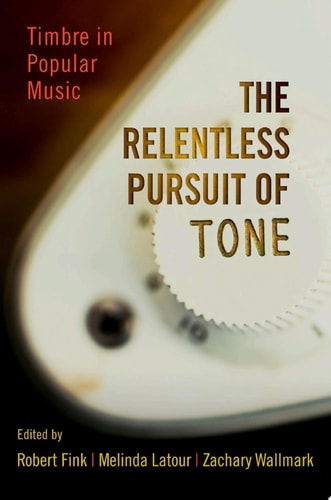
The Relentless Pursuit of Tone: Timbre in Popular Music assembles a broad spectrum of contemporary perspectives on how "sound" functions in an equally wide array of popular music. Ranging from the twang of country banjoes and the sheen of hip-hop strings to the crunch of amplified guitars and the thump of subwoofers on the dance floor, this volume bridges the gap between timbre, our name for the purely acoustic characteristics of sound waves, and tone, an emergent musical construct that straddles the borderline between the perceptual and the political. Essays engage with the entire history of popular music as recorded sound, from the 1930s to the present day, under four large categories. "Genre" asks how sonic signatures define musical identities and publics; "Voice" considers the most naturalized musical instrument, the human voice, as racial and gendered signifier, as property or likeness, and as raw material for algorithmic perfection through software; "Instrument" tells stories of the way some iconic pop music machines-guitars, strings, synthesizers-got (or lost) their distinctive sounds; "Production" then puts it all together, asking structural questions about what happens in a recording studio, what is produced (sonic cartoons? rockist authenticity? empty space?) and what it all might mean.
Menrva's Summary
THE THESIS
This volume investigates how the acoustic characteristics of sound, known as timbre, function as a complex musical and social construct within the landscape of popular music. The editors, Melinda Latour, Robert Fink, and Zachary Wallmark, curate a collection of essays that bridge the gap between physical sound waves and the emergent concept of tone. By analyzing recorded music from the 1930s to the present, the authors argue that timbre acts as a critical site where perceptual experience intersects with political and cultural identity.
THE SCOPE MAP
What You Will Find
- Analysis of sonic signatures across diverse genres including country, hip-hop, and rock.
- Examination of the human voice as a gendered and racialized signifier.
- Technical and historical accounts of iconic instruments such as synthesizers and amplified guitars.
- Structural inquiries into recording studio practices and the production of sonic aesthetics.
Scope Limits
- The text focuses primarily on recorded popular music rather than live performance acoustics.
- It does not provide a comprehensive history of all musical instruments, focusing instead on those with significant pop cultural impact.
THE AUTHORITY PERSPECTIVE
Scholars and musicologists view this collection as a significant contribution to the field of sound studies, noting its ability to synthesize technical acoustic analysis with broader cultural critique. Readers frequently highlight the text's interdisciplinary approach as a valuable resource for understanding the intersection of music technology and social identity.
Page Count:
406
Publication Date:
2018-01-01
Publisher:
Oxford University Press
ISBN-10:
0190908017
ISBN-13:
9780190908010
Musicology
Popular music
Humanities
Sound Studies
Music History
Music Production
Music theory
Community Tags
Similar Books