Women of Substance in Homeric Epic: Objects, Gender, Agency
0
0
As an Amazon Associate and affiliate partner, Menrva Books earns from qualifying purchases. Learn more
Author Description
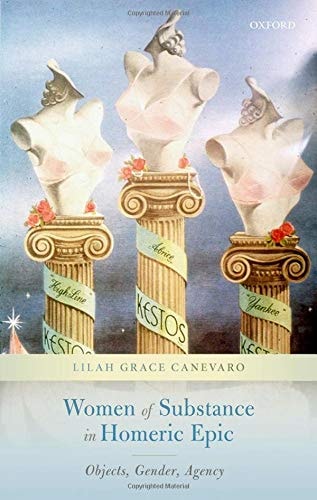
Women In Greek Epic Are Treated As Objects, Yet They Also Use Objects To Negotiate Their Own Agency. This Volume Shines New Light On The 'iliad' And 'odyssey', Combining Gender Theory And New Materialisms To Decentre The Male Subject And Put Centre Stage Not Only The Woman As Object But Also The Agency Of Women And Objects. Women In Greek Epic Are Treated As Objects, As Commodities To Be Exchanged In Marriage Or As The Spoils Of Warfare. However, Women In Homeric Epic Also Use Objects To Negotiate Their Own Agency, Subverting The Male Viewpoint By Utilizing On Their Own Terms The Very Form They Themselves Are Thought By Men To Embody. Such Female Objects Can Transcend Their Physical Limitations And Be Both Symbolically Significant And Powerfully Characterizing. They Can Be Tools Of Recognition And Identification. They Can Pause Narrative And Be Used Agonistically. They Can Send Messages And Be Vessels For Memory. Women Of Substance In Homeric Epic Offers A New And Insightful Approach To The Iliad And Odyssey, Bringing Together Gender Theory And The Burgeoning Field Of New Materialisms, New To Classical Studies, And Thereby Combining An Approach Predicated On The Idea Of The Woman As Object With One Which Questions The Very Distinction Between Subject And Object. This Productive Tension Leads Us To Decentre The Male Subject And To Put Centre Stage Not Only The Woman As Object But Also The Agency Of Women And Objects. The Volume Comes At A Turning Point In The Gendering Of Homeric Studies, With The Publication Of The First English Translations By Women Of The Iliad In 2015 And The Odyssey In 2017, By Caroline Alexander And Emily Wilson Respectively. It Makes A Significant Contribution To Scholarship By Demonstrating That Women In Homeric Epic Are Not Only Objectified, But Are Also Well-versed Users Of Objects; This Is Something That Homer Portrays Clearly, That Odysseus Understands, But That Has Often Escaped Many Other Men, From Odysseus' Alter Ego Aethon In Odyssey
Menrva's Summary
THE THESIS
This volume investigates how women in Homeric epic navigate their agency by utilizing the very objects that simultaneously define their status as commodities. Lilah Grace Canevaro, a scholar of classical literature, employs a framework that integrates gender theory with new materialism. By analyzing the Iliad and the Odyssey, she argues that the distinction between subject and object is fluid, allowing female characters to exert influence through the material world.
THE SCOPE MAP
What You Will Find
- Analysis of female characters in the Iliad and the Odyssey
- Application of new materialism to classical texts
- Examination of objects as tools for recognition, memory, and narrative pacing
Scope Limits
- The study focuses primarily on Homeric epic rather than broader Greek tragedy or lyric poetry
- It does not provide a comprehensive historical survey of women's lives in the ancient world
THE AUTHORITY PERSPECTIVE
Scholars recognize this work as a significant contribution to the evolving field of Homeric studies, particularly for its innovative application of materialist theory to ancient gender dynamics. Readers frequently note the academic density of the prose, which is intended for those familiar with classical scholarship and critical theory.
Page Count:
0
Publication Date:
1900-01-01
Publisher:
Oxford University Press,
ISBN-10:
0191865265
ISBN-13:
9780191865268
Philosophy
Criticism and interpretationHomer
Greek poetry
Homeric Epic
Gender Studies
Homer
Literary Criticism
In literature
Community Tags
Other Editions(3)
Similar Books




Reader Comments
Share Your Thoughts
No comments yet. Be the first to share your thoughts!