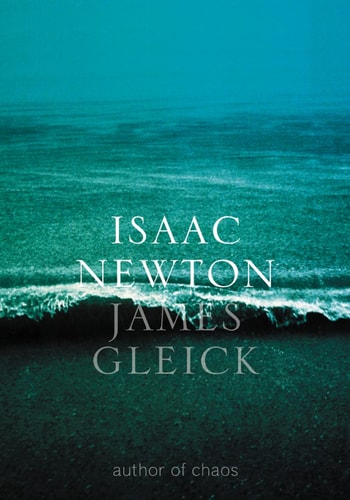
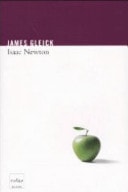
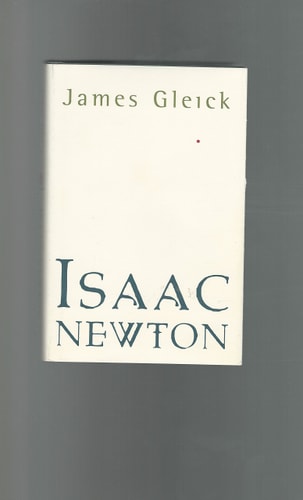
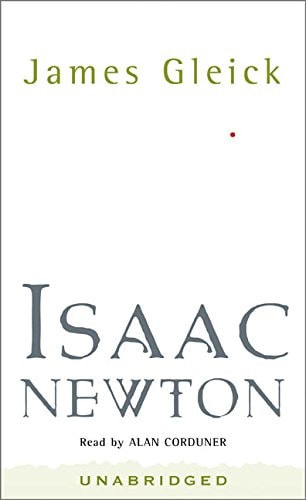
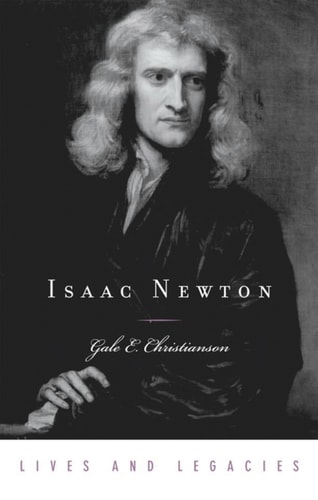
Isaac Newton
0
0
As an Amazon Associate and affiliate partner, Menrva Books earns from qualifying purchases. Learn more
Author Description
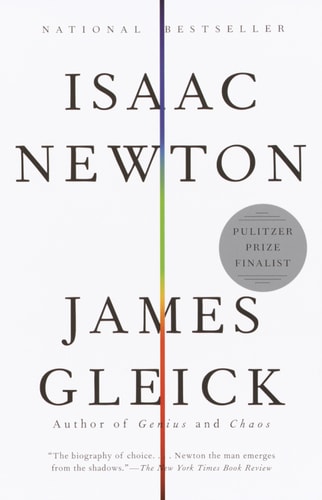
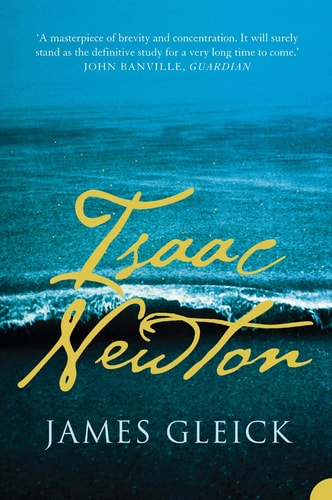
A portrait of Isaac Newton, the man who changed our understanding of the universe, of science, and of faith is painted in this book. Isaac Newton was the chief architect of the modern world. He answered the ancient philosophical riddles of light and motion; he effectively discovered gravity; he salvaged the terms "time", "space", "motion" and "place" from the haze of everyday language, standardized them and married them, each to the other, constructing an edifice that made knowledge a thing of quantative and exact. Creation, Newton demonstrated, unfolds from simple rules, patterns iterated over unlimited distances. What Newton learned remains the essence of what we know. Newton's laws are our laws. When we speak of momentum, of forces and masses, we are seeing the world as Newtonians. When we seek mathematical laws for economic cycles and human behaviour, we stand on Newton's shoulders. Our very deeming the universe as solvable is his legacy. This was the achievement of a reclusive professor, recondite theologian and fervent alchemist. A man who feared the light of exposure, shrank from controversy and seldom published his work. In his daily life he emulated the complex secrecy in which he saw the riddles of the universe encoded. His vision of nature was of its time; he never purged occult, hidden, mystical qualities. But he pushed open a door that led to a new universe.
Menrva's Summary
THE THESIS
How did a reclusive, enigmatic scholar fundamentally redefine the human understanding of the physical universe and the nature of scientific inquiry? James Gleick, a noted chronicler of scientific history, examines the life of Isaac Newton not merely as a mathematician, but as a complex figure whose work in optics, gravity, and calculus emerged from a mind deeply engaged with alchemy and theology. The book argues that Newton's synthesis of these disparate interests provided the structural foundation for modern scientific thought, transforming vague philosophical concepts into a rigorous, quantifiable framework. By analyzing Newton's private papers and historical context, Gleick illustrates how the man who feared public scrutiny became the primary architect of the modern world.
THE SCOPE MAP
What You Will Find
- An analysis of Newton's contributions to the laws of motion, gravity, and the nature of light.
- A detailed exploration of Newton's private life, including his intense interest in alchemy and recondite theology.
- Historical context regarding the scientific revolution and the transition from occult-influenced natural philosophy to modern physics.
- A study of how Newton's methodology established the modern expectation that the universe is governed by solvable, mathematical rules.
THE AUTHORITY PERSPECTIVE
This biography is widely regarded as a precise and accessible examination of Newton's intellectual evolution, successfully balancing his scientific breakthroughs with his complex, often contradictory personal life. The narrative provides a clear, scholarly look at the man behind the laws, making it a standard reference for those interested in the history of science.
Page Count:
288
Publication Date:
2003-01-01
Publisher:
Fourth Estate
ISBN-10:
0007163177
ISBN-13:
9780007163175
History
Science
Biography
Non-Fiction
Physics
Physicists biography
Community Tags
Other Editions(13)


Similar Books


Reader Comments
Share Your Thoughts
No comments yet. Be the first to share your thoughts!