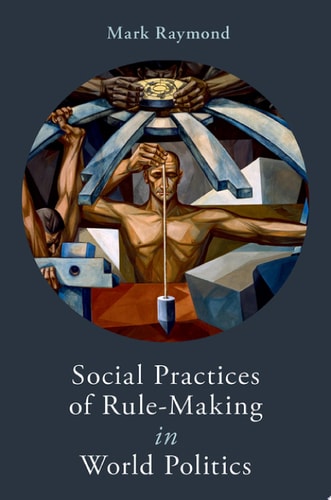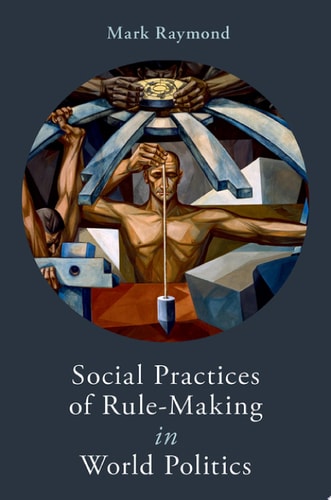
Social Practices of Rule-Making in World Politics
0
0
As an Amazon Associate and affiliate partner, Menrva Books earns from qualifying purchases. Learn more
Author Description
Rule-based global order remains a central object of study in International Relations. Constructivists have identified a number of mechanisms by which actors accomplish both the continuous reproduction and transformation of the rules, institutions, and regimes that constitute their worlds. However, it is less clear how these mechanisms relate to each other--that is, the "rules for changing the rules". This book seeks to explain how political actors know which procedural rules to engage in a particular context, and how they know when to utilize one mechanism over another. It argues that actors in world politics are simultaneously engaged in an ongoing social practice of rule-making, interpretation, and application.By identifying and explaining the social practice of rule-making in the international system, this book clarifies why global norms change at particular moments and why particular attempts to change norms might succeed or fail at any given time. Mark Raymond looks at four cases: the social construction of great power management in the aftermath of the Napoleonic Wars; the creation of a rule against the use of force, except in cases of self-defense and collective security; contestation of the international system by al Qaeda in the period immediately following the 9/11 attacks; and United Nations efforts to establish norms for state conduct in the cyber domain. The book also shows that practices of global governance are centrally concerned with making, interpreting, and applying rules, and argues for placing global governance at the heart of the study of the international system and its dynamics. Finally, it demonstrates the utility of the book's approach for the study of global governance, the international system, and for emerging efforts to identify forms and sites of authority and hierarchy in world politics.
Menrva's Summary
THE THESIS
This book investigates how political actors navigate the procedural complexities of rule-making and institutional change within the international system. Mark Raymond, a scholar of international relations, utilizes a constructivist framework to analyze the social practices that govern how global norms are created, interpreted, and applied. By examining the mechanisms behind rule transformation, the author argues that global governance is an ongoing, dynamic process rather than a static set of constraints.
THE SCOPE MAP
What You Will Find
- A theoretical framework for understanding procedural rule-making in world politics
- Analysis of the social construction of great power management post-Napoleonic Wars
- Examination of the international prohibition against the use of force
- Case studies on al Qaeda's contestation of the international system and UN cyber norms
Scope Limits
- The text does not provide a comprehensive history of all international law
- It does not offer prescriptive policy solutions for current geopolitical conflicts
THE AUTHORITY PERSPECTIVE
Experts identify this work as a significant contribution to constructivist literature, particularly for its focus on the procedural mechanics of global governance. Readers frequently note the academic density of the prose, which is best suited for students and scholars of international relations theory.
Page Count:
280
Publication Date:
2019-03-18
Publisher:
Oxford University Press
ISBN-10:
0190913118
ISBN-13:
9780190913113
Diplomacy
International Cooperation
Sociology
International relations