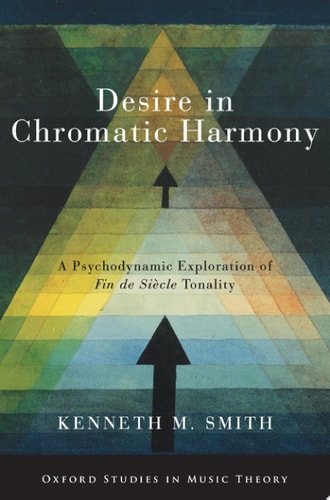
Desire in Chromatic Harmony
0
0
As an Amazon Associate and affiliate partner, Menrva Books earns from qualifying purchases. Learn more
Author Description
Of The Many Composers In The Western Classical Tradition Who Celebrated The Marriage Between Psyche And Sound, Those Explored In This Book Followed The Lines Diverging From Wagner In Philosophizing The Nature Of Desire In Music. This Books Offers Two New Theories Of Tonal Functionality In The Music Of The First Half Of The Twentieth Century That Seek To Explain Its Psychological Complexities. First, The Book Further Develops Riemann's Three Diatonic Chord Functions, Extending Them To Account From Chromatic Chord Progression And Substitution. The Three Functions (tonic, Subdominant, Dominant) Are Compared To Jacques Lacan's Twin-concepts Of Metaphor And Metonymy Which Drive The Human Desiring Apparatus. Second, The Book Develops A Technique For Analysing The Drives That Pull Chromatic Music In Multiple Directions Simultaneously, Creating A Libidinal Surface That Mirrors The Tensions Of The Psyche Found In Schopenhauer, Freud And Post-freudians-lacan, Lyotard, And Deleuze.the Harmonic Models Are Tested In Psychologically Challenging Pieces Of Music By Post-wagnerian Composers. From The Obsession With Death And Mourning In Josef Suk's Asrael Symphony To An Exploration Of Perversion In Richard Strauss's Elektra; From The Post-kantian Transcendentalism Of Charles Ives' Concord Sonata To The Accelerationism Of Skryabin's Late Piano Works; From The Sufi Mysticism Of Szymanowski's Song Of The Night To The Failed Fantasy Of The American Dream In Aaron Copland's The Tender Land, The Book Cuts A Path Through The Dense Forests Of Chromatic Complexity, And Digs Deep Into The Psychological Make-up Of Post-wagnerian Psychodynamic Music-- Provided By Publisher.
Menrva's Summary
THE THESIS
This book investigates the intersection of post-Wagnerian musical composition and the philosophical nature of human desire. Kenneth M. Smith, a scholar in music theory, utilizes a framework that bridges Riemann’s functional harmony with the psychoanalytic theories of Jacques Lacan, Sigmund Freud, and Gilles Deleuze. By applying these models to specific twentieth-century compositions, the author argues that chromatic music functions as a psychological mirror for the tensions of the human psyche.
THE SCOPE MAP
What You Will Find
- An extension of Riemann’s three diatonic chord functions to account for chromatic progression and substitution.
- A methodology for analyzing musical drives that pull compositions in multiple directions simultaneously.
- Case studies of works by Josef Suk, Richard Strauss, Charles Ives, Alexander Scriabin, Karol Szymanowski, and Aaron Copland.
Scope Limits
- The analysis is restricted to post-Wagnerian composers and specific works from the first half of the twentieth century.
- The text does not provide a general history of Western music, focusing instead on the specific intersection of psychoanalytic theory and harmonic functionality.
THE AUTHORITY PERSPECTIVE
Scholars and music theorists frequently note the high level of academic density and the interdisciplinary rigor required to engage with the author's proposed harmonic models. Experts highlight this work as a specialized contribution to the field of musicology that successfully bridges the gap between technical harmonic analysis and continental philosophy.
Page Count:
0
Publication Date:
2020-01-01
Publisher:
New York : Oxford University Press, 2020
ISBN-10:
0190923458
ISBN-13:
9780190923457
Psychology
Philosophy
Music theory
Analysis Appreciation
Music Analysis
Psychological aspects
Musicology
Harmony
Community Tags
Similar Books