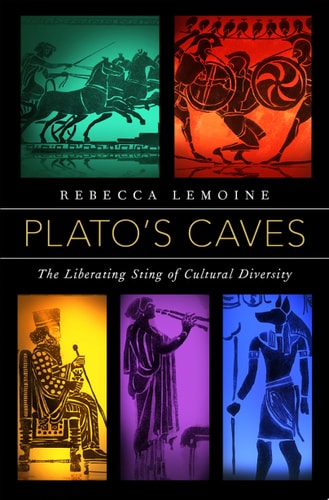
Plato's Caves
0
0
As an Amazon Associate and affiliate partner, Menrva Books earns from qualifying purchases. Learn more
Author Description
Classical Antiquity Has Become A Political Battleground In Recent Years In Debates Over Immigration And Cultural Identity-whether It Is Ancient Sculpture, Symbolism, Or Even Philosophy. Caught In The Crossfire Is The Legacy Of The Famed Ancient Greek Philosopher Plato. Though Works Such As Plato's Republic Have Long Been Considered Essential Reading For College Students, Protestors On Campuses Around The World Are Calling For The Removal Of Plato's Dialogues From The Curriculum, Contending That Plato And Other Thinkers In The Western Philosophical Tradition Promote Xenophobic And Exclusionary Ideologies. The Appropriation Of The Classics By White Nationalists Throughout History-from The Nazis To Modern-day Hate Groups-appears To Lend Credence To This Claim, And The Traditional Scholarly Narrative Of Cultural Diversity In Classical Greek Political Thought Often Reinforces The Perception Of Ancient Thinkers As Xenophobic. This Is Particularly The Case With Interpretations Of Plato. While Scholars Who Study Plato Reject The Wholesale Dismissal Of His Work, The Vast Majority Tend To Admit That His Portrayal Of Foreigners Is Unsettling. From Student Protests Over The Teaching Of Canonical Texts Such As Plato's Republic To The Use Of Images Of Classical Greek Statues In White Supremacist Propaganda, The World Of The Ancient Greeks Is Deeply Implicated In A Heated Contemporary Debate About Identity And Diversity. Plato's Caves Defends The Bold Thesis That Plato Was A Friend Of Cultural Diversity, Contrary To Many Contemporary Perceptions. It Shows That, Across Plato's Dialogues, Foreigners Play A Role Similar To That Of Socrates: Liberating Citizens From Intellectual Bondage. Through Close Readings Of Four Platonic Dialogues-republic, Menexenus, Laws, And Phaedrus-rebecca Lemoine Recovers Plato's Unique Insight Into The Promise, And Risk, Of Cross-cultural Engagement. Like The Socratic Gadfly Who Stings The Horse Of Athens Into Wakefulness, Foreigners Can Provoke Citizens
Menrva's Summary
THE THESIS
This book investigates whether Plato’s philosophical works promote xenophobic ideologies or if they actually advocate for the benefits of cultural diversity. Rebecca LeMoine, a scholar of political theory, challenges the contemporary perception that Plato’s dialogues are inherently exclusionary. By analyzing the role of foreign characters within his texts, she argues that Plato utilized these figures to provoke intellectual growth and challenge the status quo of Athenian society.
THE SCOPE MAP
What You Will Find
- A detailed analysis of four specific Platonic dialogues: Republic, Menexenus, Laws, and Phaedrus.
- A framework for understanding the function of foreign characters as catalysts for Socratic-style intellectual liberation.
- An examination of the historical appropriation of classical antiquity by nationalist movements.
Scope Limits
- The study focuses primarily on the selected four dialogues rather than an exhaustive survey of the entire Platonic corpus.
- The text does not provide a comprehensive history of Western political thought beyond its specific focus on Plato’s treatment of foreigners.
THE AUTHORITY PERSPECTIVE
Scholars and students of political theory recognize this work as a significant contribution to the ongoing debate regarding the intersection of classical studies and modern identity politics. Readers frequently note the clarity with which LeMoine navigates complex philosophical arguments to provide a nuanced defense of Plato’s political thought.
Page Count:
288
Publication Date:
2019-01-01
Publisher:
Oxford University Press
ISBN-10:
0190936991
ISBN-13:
9780190936990
Philosophy
Political Philosophy
Community Tags
Similar Books