When the Nerds Go Marching In
0
0
As an Amazon Associate and affiliate partner, Menrva Books earns from qualifying purchases. Learn more
Author Description
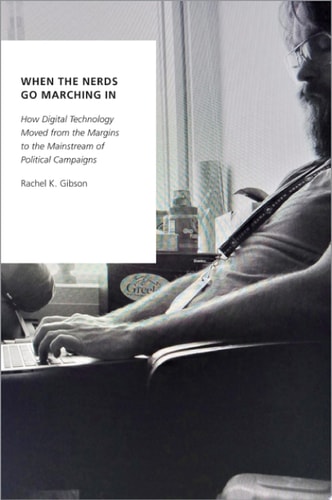
Digital Technology Has Moved From The Margins To The Mainstream Of Campaign And Election Organization In Contemporary Democracies. Previously Considered A Mere Novelty Item, Technology Has Become A Basic Necessity For Any Candidate Or Party Contemplating A Run For Political Office. While It Is Difficult To Pinpoint Exactly When The First Digital Campaign Was Officially Launched, The General Consensus Is That The Breakthrough Moment, At Least In Terms Of Public Awareness, Came During The 1992 U.s. Election Cycle. At The Presidential Level, It Was Democratic Nominee Bill Clinton Who Laid Claim To This Virtual Terra Nova After His Staff Uploaded A Series Of Basic Text Files With Biographical Information For Voters To Browse. Since That Time, Use Of The Internet In Elections Has Expanded Dramatically In The U.s. And Elsewhere. When The Nerds Go Marching In Examines The Increasing Role And Centrality Of The Internet Within Election Campaigns Across Established Democracies Since The 1990s. Combining An Extensive Review Of Existing Literature And Comparative Data Sources With Original Survey Evidence And Web Content Analysis Of Digital Campaign Content Across Four Nations--the Uk, Australia, France, And The U.s.--the Book Maps The Key Shifts In The Role And Centrality Of The Internet In Election Campaigns Over A Twenty Year Period. Specifically, Gibson Sets Out The Case For Four Phases Of Development In Digital Campaigns, From Early Amateur Experimentation And Standardization, To More Strategic Mobilization Of Activists And Voters. In Addition To Charting The Way These Developments Changed External Interactions With Citizens, Gibson Details How This Evolution Is Transforming The Internal Structure Of Political Campaigns. Despite Some Early Signs That The Internet Would Lead To The Devolution Of Power To Members And Supporters, More Recent Developments Have Seen The Emergence Of A New Digitally Literate Cohort Of Data Analysts And Software Engineers In Campaign Organization
Menrva's Summary
THE THESIS
This book investigates how digital technology has evolved from a peripheral novelty into a central, foundational component of modern political campaign organization. Rachel K. Gibson, a scholar specializing in digital politics, utilizes a combination of comparative data, original survey evidence, and web content analysis to track this transformation. She argues that the integration of the internet into democratic elections has followed a distinct four-phase development trajectory, fundamentally altering both external voter engagement and internal campaign hierarchies.
THE SCOPE MAP
What You Will Find
- A longitudinal analysis of digital campaign evolution spanning two decades.
- A four-phase framework categorizing the development of digital political strategies.
- Comparative data sets from the United Kingdom, Australia, France, and the United States.
- Analysis of the shifting power dynamics between traditional party elites and new cohorts of data analysts.
Scope Limits
- The study focuses primarily on established democracies and does not address digital campaigning in developing nations.
- The analysis concludes before the most recent advancements in generative artificial intelligence and deep-fake technology.
THE AUTHORITY PERSPECTIVE
Experts recognize this work as a comprehensive mapping of the professionalization of digital campaigning. Readers frequently note the academic density of the prose, which serves as a foundational text for understanding the structural shifts in political organization since the 1990s.
Page Count:
208
Publication Date:
2020-01-01
Publisher:
Oxford University Press
ISBN-10:
0190949031
ISBN-13:
9780190949037
Internet In Political Campaigns
Communication Studies
Technology and Society
Community Tags
Similar Books