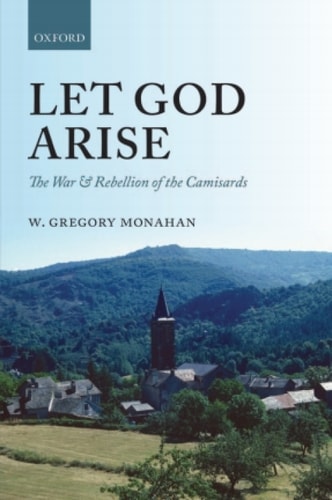
Let God Arise: The War and Rebellion of the Camisards
0
0
As an Amazon Associate and affiliate partner, Menrva Books earns from qualifying purchases. Learn more
Author Description
Let God Arise draws upon an extensive array of archival sources to present the first modern account in English entirely devoted to the rebellion and war of the Camisards. Combining traditional narrative with analysis, W. Gregory Monahan examines the issues that led to that rebellion, beginning with the conversion of the artisans and peasants of the remote mountain region of the Cévennes to Protestantism in the sixteenth century, its persistence in that confession in the seventeenth, and the shattering impact of the Revocation of the Edict of Nantes, which deprived Protestants first of their pastors, and then of the itinerant preachers who attempted to take their place. Beginning in 1701, prophetism swept the region, and the prophets, who believed they heard and followed the word of the Holy Spirit, soon led their followers into violent attacks on the Catholic Church and rebellion against the crown. A persistent and occasionally successful guerrilla war raged for over two years. Monahan argues that the resulting war involved a host of often conflicting world views, or discourses, in which the various parties to the conflict, whether the king and his ministers at Versailles, the provincial intendant Basville and local officials, the foreign powers, the Church, the generals, or the Camisard rebels themselves, often misunderstood or failed to communicate with each other, resulting too often in terrible violence and bloodshed. Let God Arise tells us much about the nature of the reign of Louis XIV and the popular religion of the time in exploring the last great rebellion in France before the Revolution of 1789.
Menrva's Summary
THE THESIS
This work investigates the origins, progression, and ultimate failure of the Camisard rebellion in the Cévennes region of France during the early eighteenth century. W. Gregory Monahan, a historian specializing in early modern France, utilizes an extensive array of archival sources to reconstruct the conflict. He argues that the war was fueled by a breakdown in communication between conflicting worldviews, including the French monarchy, local provincial officials, and the Protestant peasantry, which exacerbated the violence of the period.
THE SCOPE MAP
What You Will Find
- A detailed historical account of the Camisard rebellion from 1701 to 1703.
- Analysis of the impact of the Revocation of the Edict of Nantes on rural Protestant communities.
- Examination of the role of prophetism and religious fervor in mobilizing peasant resistance.
- Exploration of the administrative and military responses of the Versailles government.
Scope Limits
- The study focuses primarily on the Cévennes region and does not provide a comprehensive history of all French Protestant conflicts.
- The narrative concludes with the suppression of the rebellion and does not extend into the later history of the Huguenot diaspora.
THE AUTHORITY PERSPECTIVE
Scholars recognize this text as the definitive modern English-language account of the Camisard war. Readers frequently note the academic rigor of the research and the author's ability to synthesize complex administrative and religious tensions into a coherent historical narrative.
Page Count:
320
Publication Date:
2014-01-01
Publisher:
OUP Oxford
ISBN-10:
0191002127
ISBN-13:
9780191002120
History
Protestantism
Religious History
European History
Military History
French History
Community Tags
Similar Books