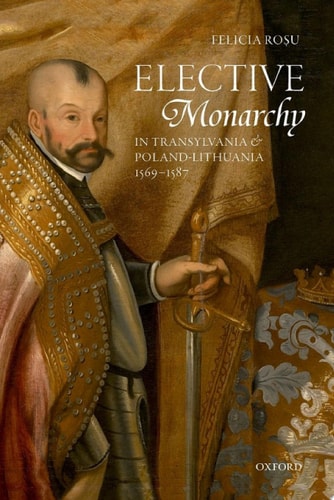
Elective Monarchy in Transylvania and Poland-Lithuania, 1569-1587
0
0
As an Amazon Associate and affiliate partner, Menrva Books earns from qualifying purchases. Learn more
Author Description
This book is an examination of why and how the elective principle, already established in Transylvanian and Polish political culture in the late medieval period, was transformed in the early elections of the 1570s. In this period, the two polities adopted constitutional arrangements different in depth and scope but based on the same fundamental principles: elective thrones, state-sanctioned religious pluralism, and constitutional guarantees for the right of disobedience. There were important variations in their regulation and application, but Transylvania and the newly created Polish-Lithuanian Commonwealth had one essential thing in common: they were the only two polities in early modern Europe whose political systems secured the succession of their rulers through large-scale elections in which the dynastic principle, although still important, was not binding.
Menrva's Summary
THE THESIS
This book investigates the transformation and implementation of elective monarchy as a political principle within Transylvania and the Polish-Lithuanian Commonwealth during the late sixteenth century. Felicia Rosu, a scholar of early modern political culture, analyzes how these two states diverged from the prevailing European dynastic norms of the era. By examining constitutional arrangements and state-sanctioned religious pluralism, the author argues that these polities established unique frameworks for succession that prioritized elective processes over hereditary rights.
THE SCOPE MAP
What You Will Find
- Comparative analysis of political systems in Transylvania and the Polish-Lithuanian Commonwealth
- Examination of constitutional guarantees regarding the right of disobedience
- Study of the transition from medieval elective principles to early modern electoral practices
Scope Limits
- The analysis is strictly confined to the period between 1569 and 1587
- The study does not cover the long-term decline or eventual dissolution of these elective systems
THE AUTHORITY PERSPECTIVE
Historians recognize this work as a rigorous comparative study that clarifies the mechanics of early modern elective governance. The text is noted for its academic precision and its contribution to understanding constitutional developments in Eastern and Central Europe.
Page Count:
239
Publication Date:
2017-01-01
Publisher:
OUP Oxford
ISBN-10:
0192506447
ISBN-13:
9780192506443
History
History - Modern
Modern History
Monarchy
European History
Poland
Constitutional History
Community Tags
Similar Books