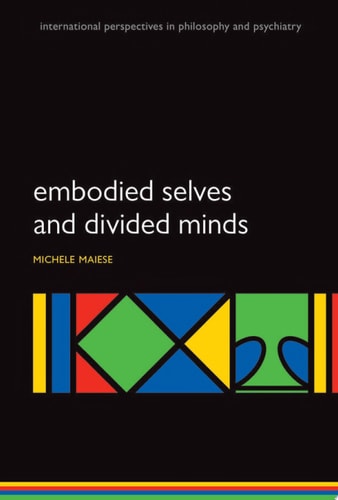
Embodied Selves and Divided Minds
0
0
As an Amazon Associate and affiliate partner, Menrva Books earns from qualifying purchases. Learn more
Author Description
Embodied Selves and Divided Minds examines how research in embodied cognition and enactivism can contribute to our understanding of the nature of self-consciousness, the metaphysics of personal identity, and the disruptions to self-awareness that occur in case of psychopathology. It begins with the assumption that if we take embodiment seriously, then the resulting conception of the self (as physically grounded in the living body) can help us to make sense of how a minded subject persists across time. However, rather than relying solely on puzzle cases to discuss diachronic persistence and the sense of self, this work looks to schizophrenia and dissociative identity disorder as case studies. Here we find real-life examples of anomalous phenomena that signify disruptions to embodied self-experience and appear to indicate a fragmentation of the self. However, rather than concluding that these disorders count as genuine instances of multiplicity, the book's discussion of the self and personal identity allows us to understand the characteristic symptoms of these disorders as significant disruptions to self-consciousness. The concluding chapter then examines the implications of this theoretical framework for the clinical treatment of schizophrenia and dissociative identity disorder. Embodied Selves and Divided Minds reveals how a critical dialogue between Philosophy and Psychiatry can lead to a better understanding of important issues surrounding self-consciousness, personal identity, and psychopathology.
Menrva's Summary
THE THESIS
How does an embodied approach to cognition and enactivism clarify the nature of self-consciousness and the persistence of personal identity in the context of psychopathology? Michelle Maiese, a philosopher specializing in the intersection of mind and body, utilizes research in embodied cognition to challenge traditional metaphysical views of the self. By grounding the subject in the living body, the author constructs a framework to analyze how individuals maintain a sense of self over time, specifically addressing how this process fails in cases of severe mental disorder.
THE SCOPE MAP
What You Will Find
- Theoretical framework of embodied cognition and enactivism applied to personal identity
- Analysis of schizophrenia and dissociative identity disorder as case studies for self-disruption
- Clinical implications for the treatment of dissociative and psychotic disorders
Scope Limits
- Does not provide a comprehensive clinical manual for psychiatric diagnosis
- Does not rely on traditional philosophical thought experiments or puzzle cases for diachronic persistence
THE AUTHORITY PERSPECTIVE
Scholars in the field of philosophy and psychiatry recognize this work as a significant contribution to the dialogue between the two disciplines. Readers frequently note the academic density of the prose, which is intended for those familiar with contemporary debates in cognitive science and phenomenology.
Page Count:
319
Publication Date:
2015-01-01
Publisher:
OUP Oxford
ISBN-10:
0191003409
ISBN-13:
9780191003400
Psychology
Philosophy
Identity Philosophical concept
Consciousness
Allied Health
Metaphysics
Cognition
Medical
Mental Health
Health Care
Psychiatry