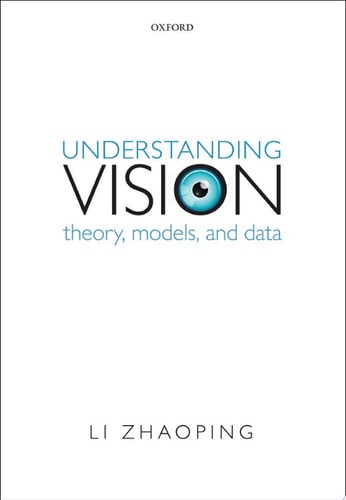
Understanding Vision: Theory, Models, and Data
0
0
As an Amazon Associate and affiliate partner, Menrva Books earns from qualifying purchases. Learn more
Author Description
While the field of vision science has grown significantly in the past three decades, there have been few comprehensive books that showed readers how to adopt a computional approach to understanding visual perception, along with the underlying mechanisms in the brain. Understanding Vision explains the computational principles and models of biological visual processing, and in particular, of primate vision. The book is written in such a way that vision scientists, unfamiliar with mathematical details, should be able to conceptually follow the theoretical principles and their relationship with physiological, anatomical, and psychological observations, without going through the more mathematical pages. For those with a physical science background, especially those from machine vision, this book serves as an analytical introduction to biological vision. It can be used as a textbook or a reference book in a vision course, or a computational neuroscience course for graduate students or advanced undergraduate students. It is also suitable for self-learning by motivated readers. in addition, for those with a focused interest in just one of the topics in the book, it is feasible to read just the chapter on this topic without having read or fully comprehended the other chapters. In particular, Chapter 2 presents a brief overview of experimental observations on biological vision; Chapter 3 is on encoding of visual inputs, Chapter 5 is on visual attentional selection driven by sensory inputs, and Chapter 6 is on visual perception or decoding. Including many examples that clearly illustrate the application of computational principles to experimental observations, Understanding Vision is valuable for students and researchers in computational neuroscience, vision science, machine and computer vision, as well as physicists interested in visual processes.
Menrva's Summary
THE THESIS
This book investigates the computational principles and underlying biological mechanisms that govern primate visual perception. Li Zhaoping, a specialist in computational neuroscience, synthesizes physiological, anatomical, and psychological data to construct a framework for understanding how the brain processes visual inputs. The text bridges the gap between biological observation and mathematical modeling, providing a structured approach for researchers and students to analyze visual systems through a computational lens.
THE SCOPE MAP
What You Will Find
- Computational models of biological visual processing
- Analysis of visual input encoding and attentional selection
- Theoretical frameworks for visual perception and decoding
- Integration of experimental observations with mathematical theory
Scope Limits
- Does not provide an exhaustive history of all vision science sub-disciplines
- Does not require advanced mathematical proficiency for conceptual understanding of core principles
THE AUTHORITY PERSPECTIVE
Experts identify this work as a bridge between the physical sciences and biological vision research, noting its utility for both graduate-level coursework and independent study. Readers frequently highlight the modular structure of the chapters, which allows for focused study on specific topics like attentional selection or sensory encoding without requiring a linear reading of the entire text.
Page Count:
397
Publication Date:
2014-01-01
Publisher:
OUP Oxford
ISBN-10:
0191008311
ISBN-13:
9780191008313
Science
Psychology
Neuroscience
Neurosciences
Vision Science
Allied Health
Vision
Computer Vision
Medical
Community Tags
Similar Books