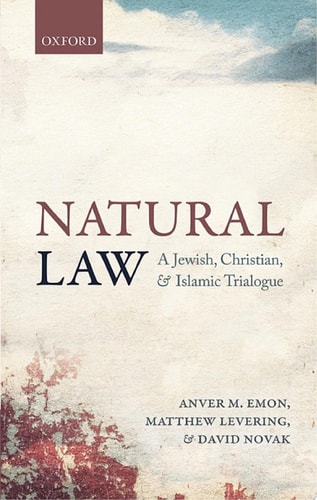
Natural Law: A Jewish, Christian, and Islamic Trialogue
0
0
As an Amazon Associate and affiliate partner, Menrva Books earns from qualifying purchases. Learn more
Author Description
This book is an examination of natural law doctrine, rooted in the classical writings of our respective three traditions: Jewish, Christian, and Islamic. Each of the authors provides an extensive essay reflecting on natural law doctrine in his tradition. Each of the authors also provides a thoughtful response to the essays of the other two authors. Readers will gain a sense for how natural law (or cognate terms) resonated with classical thinkers such as Maimonides, Origen, Augustine, al-Ghazali and numerous others. Readers will also be instructed in how the authors think that these sources can be mined for constructive reflection on natural law today. A key theme in each essay is how the particularity of the respective religious tradition is squared with the evident universality of natural law claims. The authors also explore how natural law doctrine functions in particular traditions for reflection upon the religious other.
Menrva's Summary
THE THESIS
This work investigates how the doctrine of natural law is conceptualized, defended, and reconciled with religious particularity within the Jewish, Christian, and Islamic traditions. The authors, Anver M. Emon, David Novak, and Matthew Levering, utilize their respective expertise in legal and theological history to examine classical texts from Maimonides, Origen, Augustine, and al-Ghazali. By presenting individual essays followed by collaborative responses, the authors construct a framework for understanding how universal moral claims interact with specific religious identities and how these traditions perceive the religious other.
THE SCOPE MAP
What You Will Find
- Comparative analysis of natural law doctrines across three Abrahamic faiths.
- Historical examination of classical thinkers including Maimonides, Origen, Augustine, and al-Ghazali.
- A structured trialogue format featuring primary essays and critical responses.
- Exploration of the tension between religious particularity and universal moral claims.
Scope Limits
- The text does not provide a comprehensive history of secular natural law theory.
- It does not attempt to synthesize these traditions into a single unified moral code.
THE AUTHORITY PERSPECTIVE
Scholars and theologians identify this text as a significant contribution to comparative religious ethics and interfaith dialogue. Readers frequently note the academic density of the prose, which requires a foundational understanding of theological history to fully appreciate the nuanced arguments presented.
Page Count:
256
Publication Date:
2014-01-01
Publisher:
OUP Oxford
ISBN-10:
0191016721
ISBN-13:
9780191016721
Philosophy
Religion
Theology
Natural law
Ethics
Community Tags
Similar Books